When Communism Met Black Anti-Colonialism in Interwar France
In post–World War I Paris, wounded Senegalese veteran Lamine Senghor used his experience to denounce the evils of imperialism. A militant in the French Communist Party, he married working-class politics with a consistent anti-racism — putting the unity of the colonized peoples at the heart of the fight against oppression and injustice.
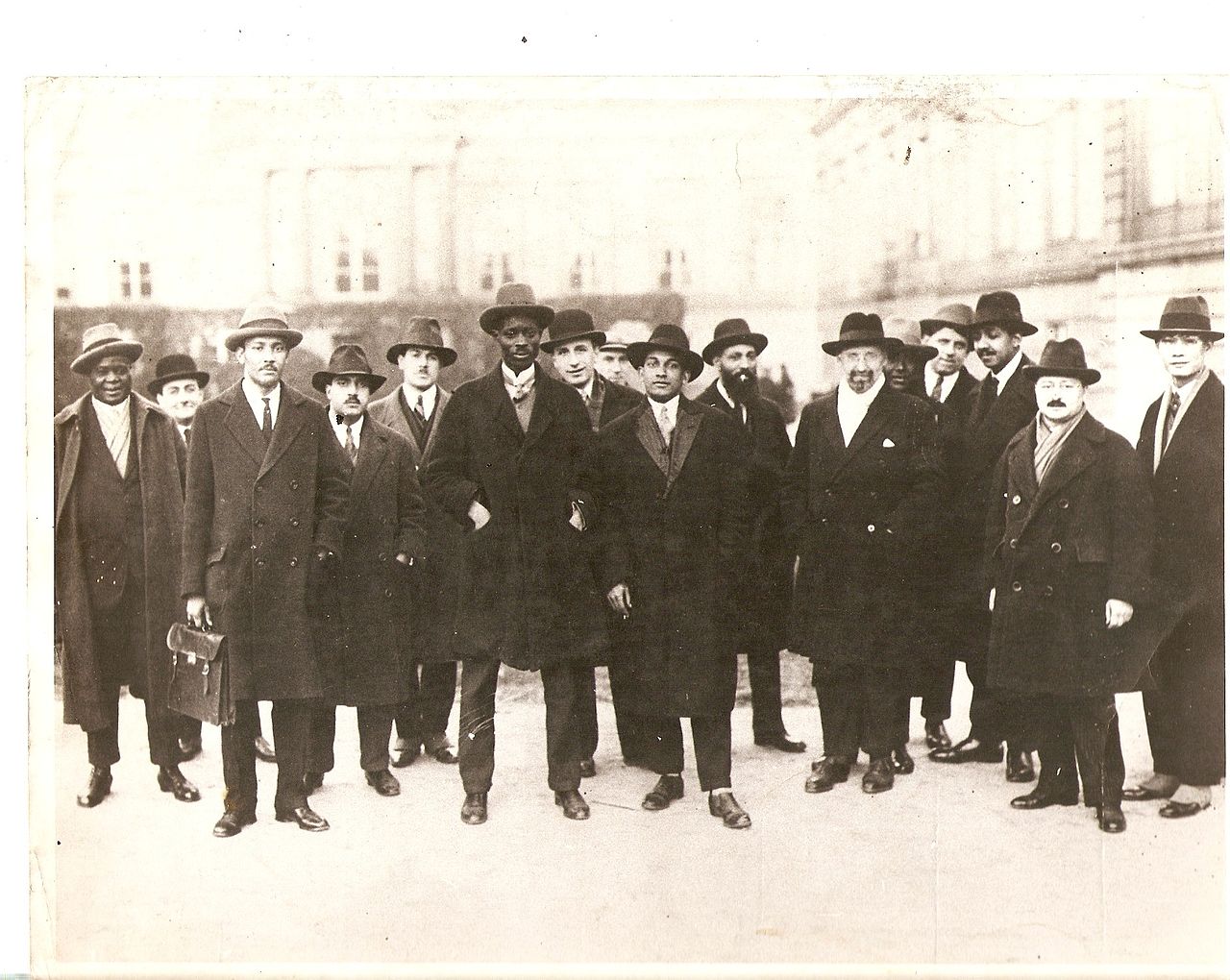
Lamine Senghor (the tall man at front and center), attending the inaugural meeting of the League against Imperialism in Brussels, Belgium, in 1927. Photo: Archives de l’IFAN, Dakar Sénégal
On the evening of February 11, 1927, the tall, gaunt figure of Lamine Senghor strode to the podium at the inaugural meeting of the League against Imperialism (LAI). The LAI was one of the interwar communist movement’s foremost attempts to forge a united anti-colonial front of nationalists, communists, and socialists, uniting white Europeans and colonial subjects from around the globe. Yet, like other such initiatives, it proved short-lived.
Senghor was a decorated Senegalese veteran of World War I, who had risen to prominence in the mid-1920s as a leading figure in the emerging communist-inspired anti-colonial movement in France. In his rousing speech at the LAI meeting in Brussels, he denounced imperialism as a modern form of slavery and called on the workers of the world to unite and overthrow the entire capitalist-imperialist system. His call for a world of “no more slaves” applied equally to the exploited of the colonies and the working class of the industrial nations.
He reserved particular scorn for France’s treatment of its colonial soldiers during and after the war — a central factor in his own radicalization. His views on the suffering endured by colonial soldiers had extra authority given his own status as a “war invalid,” the self-description he typically used on the official public documents produced by the movements to which he belonged. In April 1917, his battalion of the tirailleurs sénégalais [West African infantrymen] had been gassed near Verdun, and Senghor had lost one of his lungs — an injury from which he never fully recovered.