To Recapture the Spirit of the Indignados, Podemos Has to Speak to Working People
Coming almost exactly ten years since Spain’s Indignados protests, Pablo Iglesias’s retirement as Podemos leader marks the end of a political era. In its early years, Podemos appealed to Spaniards outside traditional left-wing circles — yet it failed to build a party working people could consider their own.
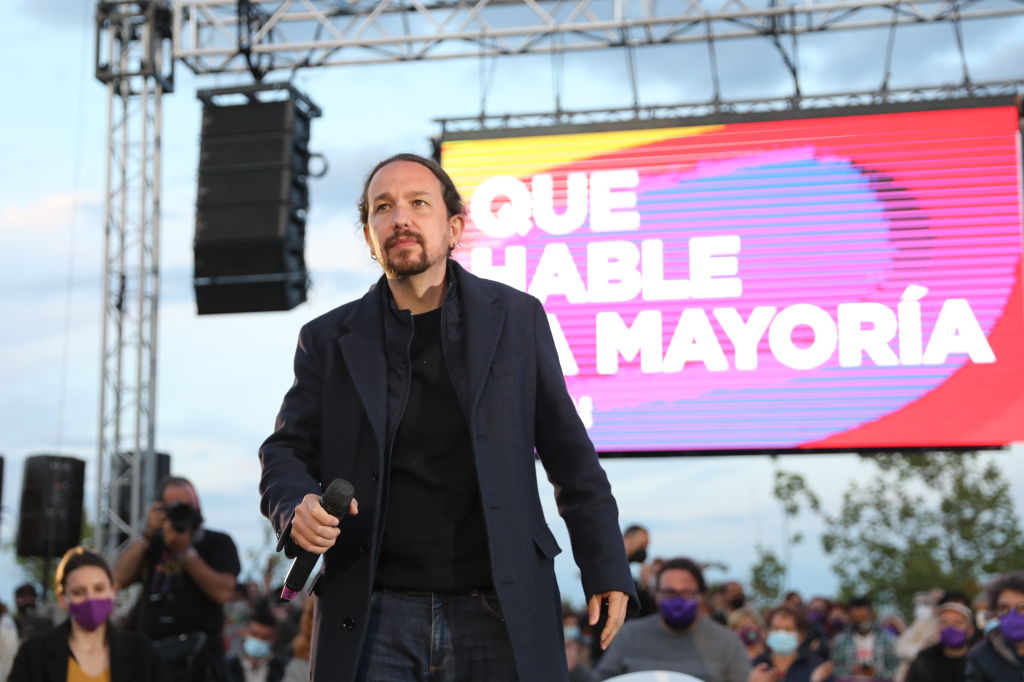
Pablo Iglesias on May 2, 2021, in Madrid, Spain. (Isabel Infantes / Europa Press via Getty Images)
Pablo Iglesias’s resignation as Podemos leader is a watershed moment in Spanish politics. Coming as a result of the party’s meager 7 percent vote in last week’s Madrid regional elections, it also demands a wider reflection on what Podemos’s fate means for left-wing strategy, even far beyond Spain itself.
Podemos was one of the boldest political innovations to emerge from the protests and mobilization that spread across the West over the 2010s, including Spain’s own 15-M Movement. The party presented itself as a political instrument able to represent the hundreds of thousands of people who had gathered in town squares across Spain to denounce the political class to the cry of “they don’t represent us.”
At the helm of the party founded in 2014, Iglesias seemed to represent a new brand of left leader, one fully cognizant of the importance of media and popular culture in the contemporary battle for consensus. He was a youthful and joyful populist tribune perfectly at home in TV studios and capable of pitching his radical message far beyond the traditional hard-left core electorate. Yet seven years since Podemos’s foundation, the enthusiasm for it seems to have fizzled out.