Spain’s Left Is Winning the Battle for Welfare — But Not the War on Neoliberalism
A year into Spain's coalition government, today's budget offers major public health care investment and a commitment to expand the Guaranteed Minimum Income plan. These promises show how Unidas Podemos has changed the political agenda — and yet centrist ministers are still stonewalling on measures that risk upsetting business.
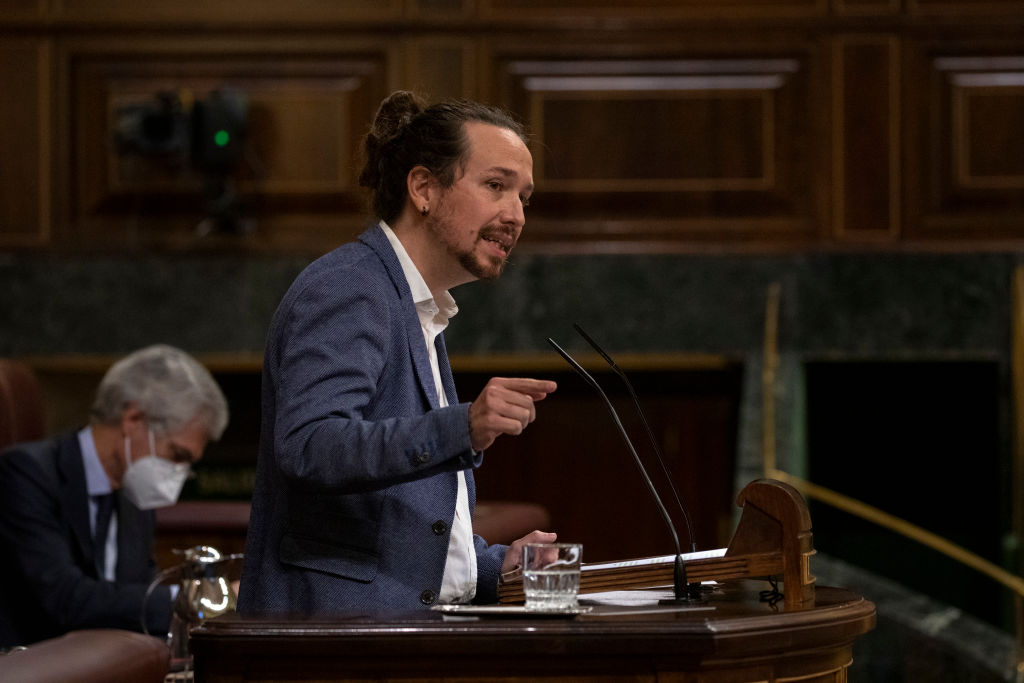
Second Deputy Prime Minister Pablo Iglesias speaks at the Spanish Parliament in Madrid, Spain in October. (Pablo Blazquez Dominguez / Getty Images)
“This government is different because we are in it,” Spain’s deputy prime minister Pablo Iglesias told Jacobin last month. “We are the only force from our political tradition that is in the government of an EU country, indeed in the fourth-biggest eurozone economy.”
The ten-month-old coalition between his radical-left Unidas Podemos and the social-democratic PSOE was, he acknowledged, “full of risks, of dangers.” But he still thought “in historical terms, we’ve done the right thing” entering office as a junior partner.
The budget deal agreed upon by the two parties, which passes its final parliamentary vote this week, shows the fine balance between the risks and potential benefits of this strategic wager. It includes key concessions to Unidas Podemos’s agenda around boosting social spending and reinforcing the welfare state — but also lays the foundations for a wider recovery plan much more reflecting the PSOE’s own economic orthodoxy and centrist instincts.