Fan-Owned Clubs Can Help Democratize Football
The European Super League fiasco has sparked a heated debate about money in football, with many pointing to Germany’s fan-owned clubs as an alternative. Fan ownership is an important step — but it’ll only work if fans are organized and thinking politically.
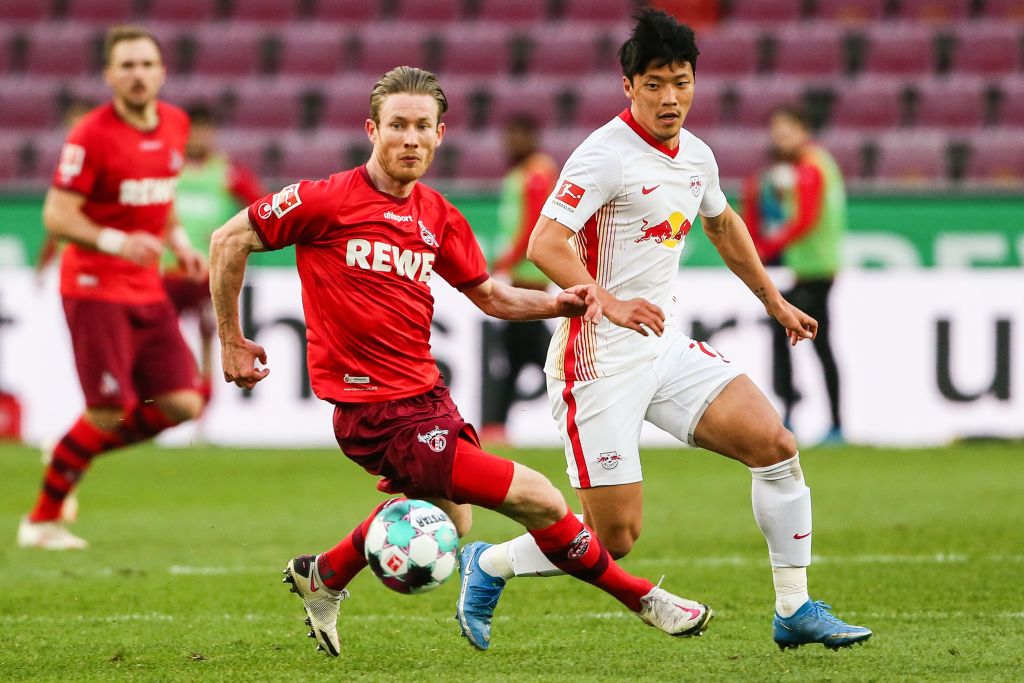
Hwang Hee-Chan of Leipzig vies with Florian Kainz of Cologne during a German Bundesliga match in Cologne, Germany, 2021. (Str / Xinhua via Getty)
Apparently discontented with their exorbitant revenues and grossly outsized influence, on Sunday twelve of Europe’s biggest football clubs tweeted out their plans to form a breakaway European Super League (ESL). The plan seems to have failed already — with near-unanimous opposition soon forcing them to back down. Yet, more than just a humorous anecdote about incompetent billionaires’ megalomania, this experience ought to serve as a call to arms.
Rejection from fans, players, coaches, rival teams, domestic leagues, and international governing bodies like FIFA and UEFA — coupled with the ESL members’ lack of an actual plan — have staved off this attempt to submit football to further commercial domination. Even by European soccer standards, the ESL move was a more brazen cash grab than usual. And yet, it’s clear that a return to the unjust status quo isn’t an option, either.
As the football world contemplates potential solutions, a wave of envious gazes have been cast toward Germany, which is frequently seen as an outlier for its more democratic fan ownership model. Yet, what those pining for Germany’s fan-owned footy often miss is that having the right club ownership structures doesn’t automatically create a progressive sporting paradise.