The System of Capitalism Has Always Been Built on Violence
Capitalism is often presented as synonymous with peaceful exchange. But the system has always reproduced itself through violence in defense of private property and power.
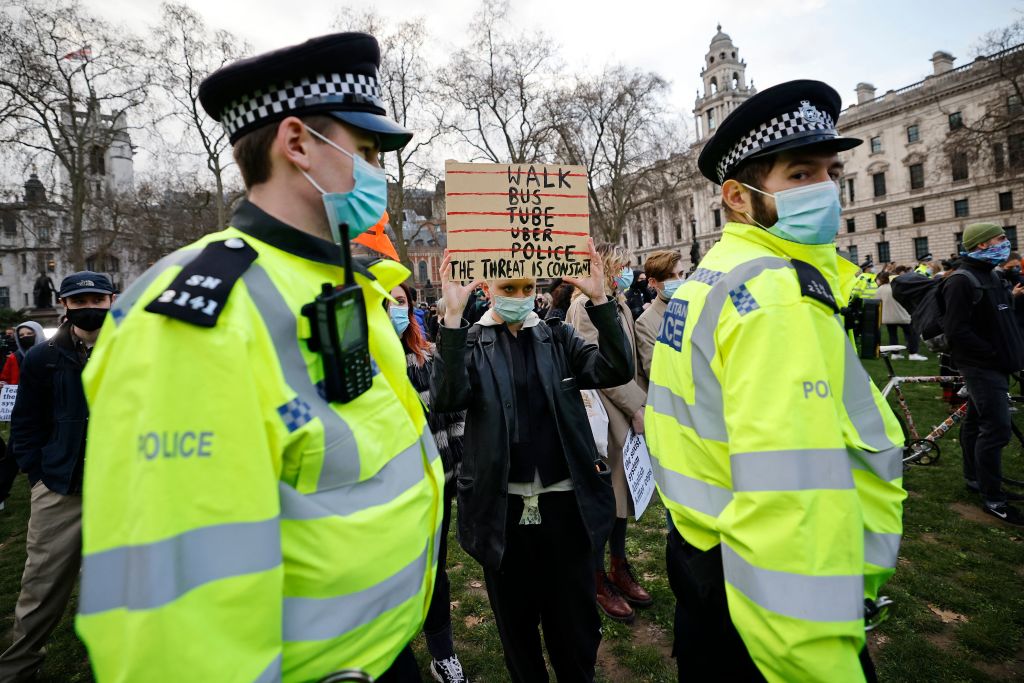
Protestors assemble in Parliament Square on March 15 to demonstrate against the Police, Crime, Sentencing and Courts Bill, which passed through the House of Commons yesterday evening. (Tolga Akmen / AFP via Getty Images)
For a long time, we are told, capitalism has been making the world safer. Ignoring the violent conflicts Western states frequently raise abroad, liberals have maintained that peace between previously militaristic nations — most notably in Europe — has been achieved through their social, economic, and political integration.
But those on the Left, too, have increasingly focused on the role of capitalist ideology, as opposed to the use of force, in securing the legitimacy of the status quo. We analyzed how the construction and indoctrination of good neoliberal subjects — whether through the media, the education system, or the workplace — ensured that the average citizen complied with the exercise of state and corporate power.
Ideology is, of course, a deeply significant factor in explaining why people continue to submit to their own exploitation and oppression, as it can render the exercise of power less visible. You might not know why you want to buy a new car on credit, or instinctively distrust any and all forms of protest, or silently agree to the assertion that the government “can only spend as much as it earns.”