East Germany’s Shock Therapy
- Robert Dale
The fall of the Berlin Wall was meant to signal political freedom and economic prosperity. But for many East Germans, the flash privatization of state enterprises and social dislocation meant being second-class citizens in a reunified country.
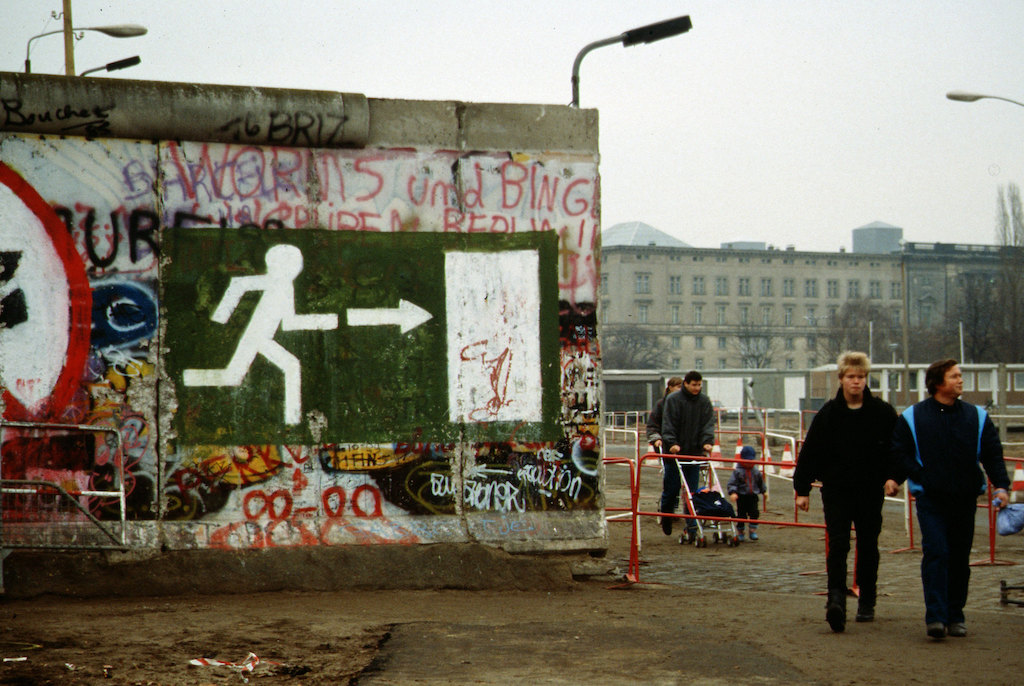
The Berlin Wall in November 1989. (Thiémard / Flickr)
The fall of the Berlin Wall on November 9, 1989, is often seen as the end of the road for the German Democratic Republic (GDR, or East Germany), as its population finally overcame a hated border regime. Yet protests in the previous months had mainly called for a democratized GDR, rather than reunification — and only later did the merger with West Germany come to seem inevitable.
After the fall of the wall had discredited the existing politburo, from November 1989 to March 1990, socialist reformer Hans Modrow’s transitional government worked to change the GDR. His economics minister was Christa Luft, hitherto employed by the University of Economic Science in East Berlin and the International Institute of Economic Problems of the World Socialist System in Moscow.
Luft’s remit was to prepare a major economic reform — and modernize the socialist economic system. But her ideas were never realized. The Modrow government was swept away by the Christian-Democratic Alliance for Germany in the last East German parliamentary elections on March 18, 1990, paving the way for the GDR’s rapid incorporation into the West.