Another East Germany Was Possible
- Loren Balhorn
The scenes of thousands of East Germans passing through the Berlin Wall crossing on November 9, 1989 are remembered as the end of the Cold War. But on November 4, almost a million had demonstrated for reform — and they wanted to create democratic socialism on East German soil.
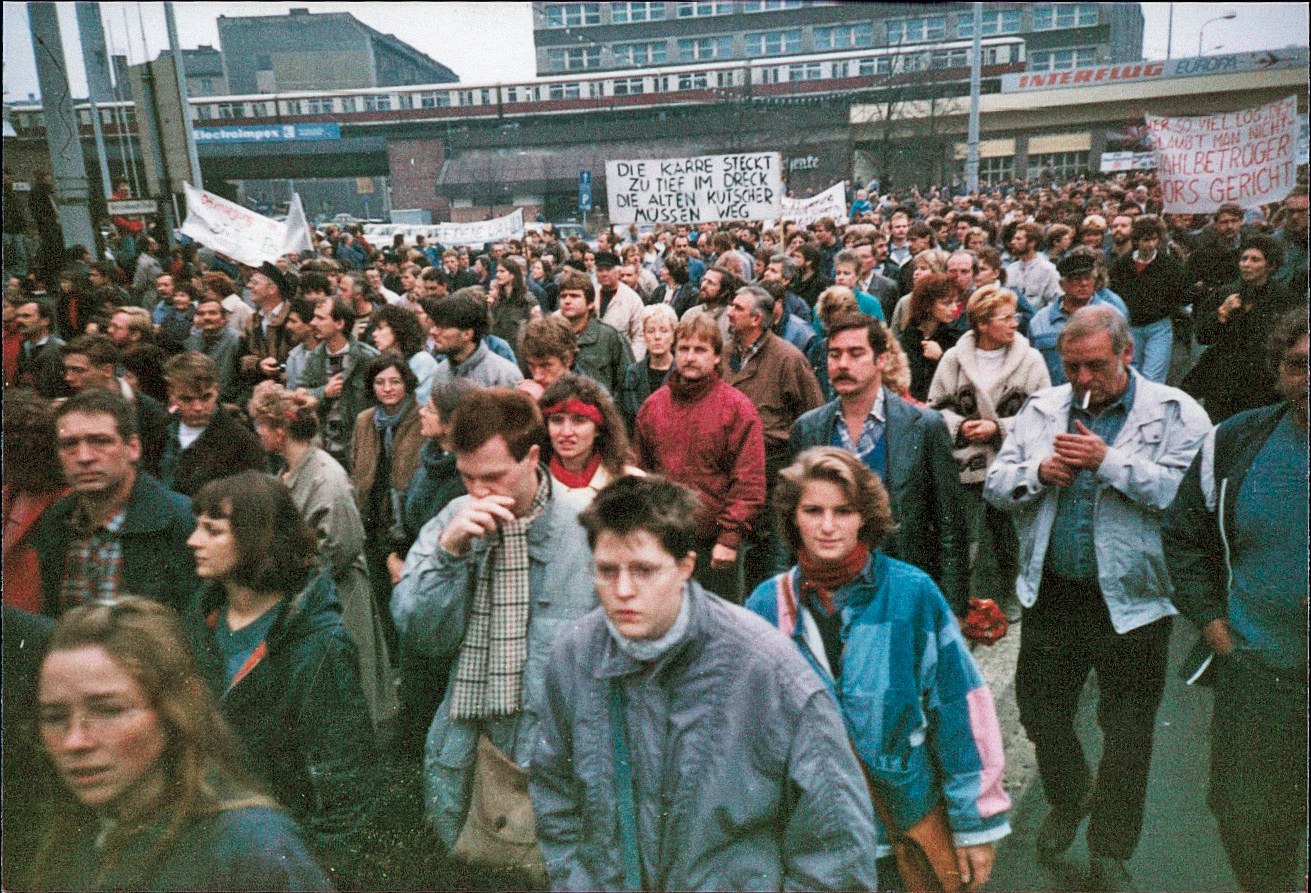
The demonstration marches through Alexanderplatz, November 4, 1989.Ralf Roletschek / roletschek.at
At the beginning of 1989 nobody believed that a change in power was possible in the German Democratic Republic (GDR), either in the East or in the West. Erich Honecker, general secretary of the ruling Socialist Unity Party (SED) and chairman of the State Council, declared in mid-January of that year: “The Wall will continue to exist in fifty and even one hundred years’ time if the reasons for its existence have not been resolved.”
That his assessment was widely accepted is evidenced by a decision taken by the conservative West German publisher Axel Springer around the same time. For decades, its popular newspapers and magazines (including the tabloid Bild) had placed the initials “GDR” in quotation marks, as a way to question the East German state’s legitimacy. This practice was now to end.
Nine months later, the situation was fundamentally different. Tens of thousands of East Germans had left their country for the West over the summer, mostly through the newly opened Hungarian border to Austria. Oppositional groupings like the New Forum were rapidly gaining a mass following, and growing numbers of people in Leipzig and other cities were calling for political reforms at weekly so-called “Monday demonstrations.”