Catalan Independence Can’t Win Without Broad Working-Class Support
In Sunday’s Catalan elections, pro-independence parties topped 50 percent support for the first time. But with popular mobilization on the decline, pro-independence forces will need to answer the social needs of the working-class majority if they are to rally a broad front against Spain’s inflexible constitutional order.
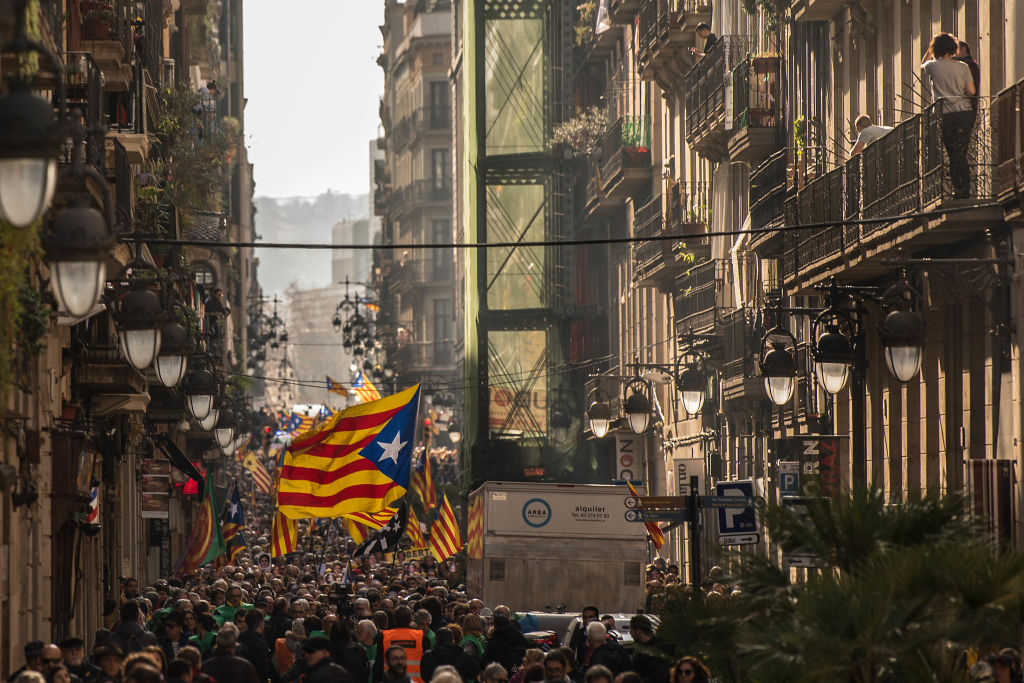
Demonstrators take part in a protest to support former Catalan President, Carles Puigdemont on January 30, 2018 in Barcelona, Spain.(David Ramos / Getty Images)
The bizarre parliament that came out of the Catalan elections of December 21, 2017, just after the failed declaration of independence and an avalanche of state repression, had long been a dead duck. On February 14, five million Catalans were called to the polls to elect a new government, in an election controversially staged amid the pandemic.
Pro-independence forces again won popular backing, this time with an outright majority of votes. Importantly, the center-left Esquerra Republicana (ERC), became the main pro-independence party for the first time since the return to democracy. A republican leader is likely to become Catalan president for the first time in ninety years.
Low Turnout
But another key factor was the high abstention — the 53.5 percent turnout was a 22.5 percent drop from the 2017 contest. This obviously owes in part to the pandemic, but it is also worth adding that the turnout in recent elections had been particularly high. In 2015 (a 75 percent turnout) and especially 2017 (an almost 80 percent turnout), pro-independence forces had made the contests into “plebiscites on independence,” for want of an official vote on separation. Such turnout levels are much higher than any neighboring country.