As Portugal Votes, the Far Right Is at Its Strongest Since the Return to Democracy
After the Carnation Revolution overthrew the dictatorship in 1974, Portugal boasted over four decades with no fascist presence in parliament. But with a far-right anti-migrant candidate likely to be runner-up in today’s presidential election, a hard-won anti-fascist consensus is beginning to crumble.
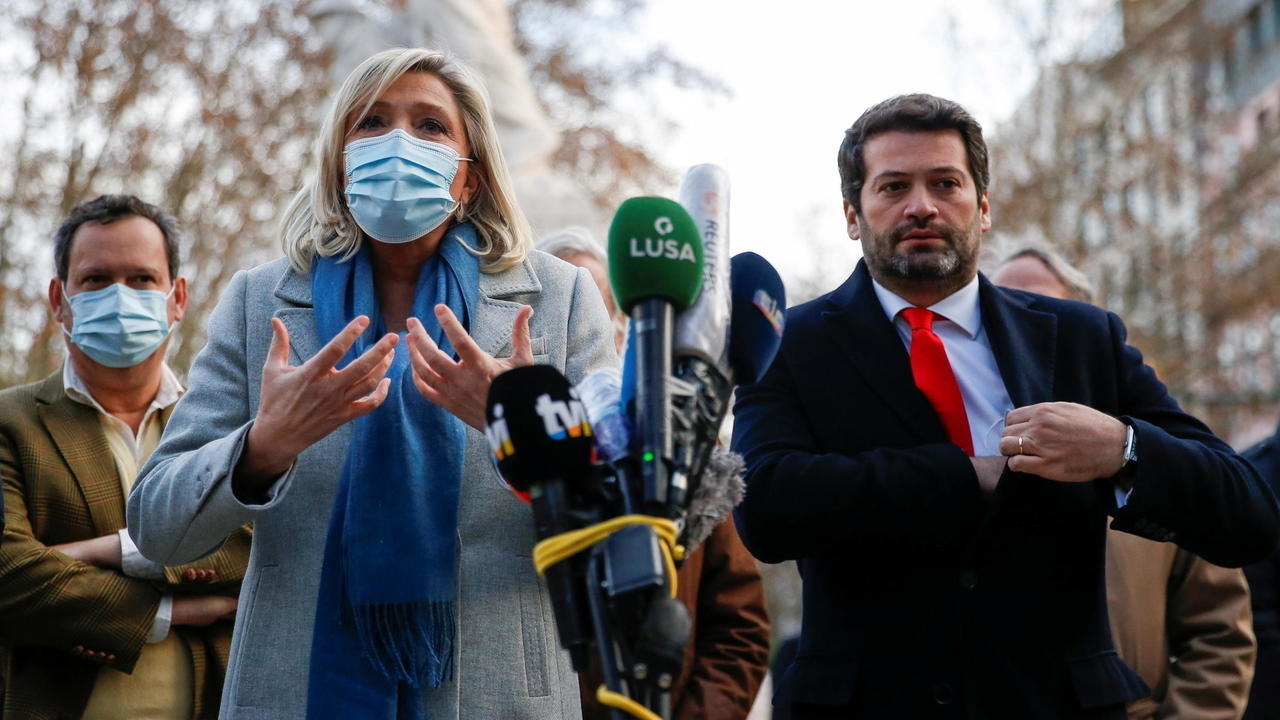
André Ventura, far-right presidential candidate from Chega, hosts French far-right politician Marine Le Pen on the campaign trail in Lisbon, Portugal, in January 2021.
Everybody knows who will win today’s Portuguese presidential elections. The winner has been known since January 24, 2016, when professor Marcelo Rebelo de Sousa, a tenured academic, politician, and beloved TV pundit, was first declared president. The foretelling of his repeat victory isn’t just linked to his success back in 2016, but to the fact that he has been such a perennial figure in political folklore — indeed, any other result would be unthinkable.
While his political affiliation lies with the center-right PSD, Rebelo de Sousa is a liberal populist best known for his many stunts — from driving a taxi around Lisbon during his mayoral campaign in 1989, to swimming to the rescue of two women whose kayak had capsized last summer. He’s been called the “King of Selfies” for the sheer number of photos he takes with fans; if not for the pandemic, he’d doubtless have been kissing every woman over sixty-five years old on the campaign trail.
It’s clear that by Monday, Rebelo de Sousa will be president for another five-year term: polls rate him close to 60 percent support. But that isn’t what these presidential elections are about. Rather, this is a poll on the rise of the far right — and a serious test for Portugal’s historic anti-fascist legacy.