Today, We Celebrate the Carnation Revolution
On April 25, 1974, a mutiny in the Portuguese army put an end to five decades of dictatorship. The revolution that followed showed how working people can take a modern economy into their own hands.
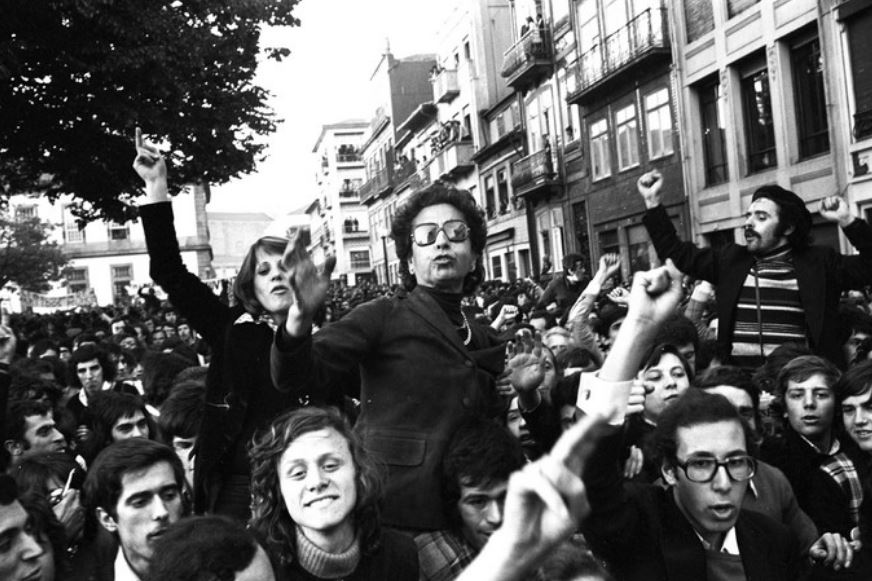
Crowds in Lisbon, Portugal in April 1974. Wikimedia Commons
Today, marks the anniversary of Portugal’s liberation from dictatorship. On April 25, 1974, soldiers from the dissident Armed Forces Movement (MFA) removed dictator Marcelo Caetano, demanding that Portugal abandon its failed colonial wars in Africa. A regime dating back to the age of Mussolini and Hitler had finally met its end, along with Europe’s last old-style empire.
The revolt within the army was the immediate trigger for the regime’s downfall, and the images of joyous citizens handing carnations to troops would come to symbolize the birth of Portuguese democracy itself. Yet the Carnation Revolution that continued until November 1975 was more than just a coup d’état, or even a transition to a new parliamentary order.
Rather, the breaking of the old regime opened the way to a far wider questioning of how society was to be run. With the organs of dictatorship immediately swept away, new organs of mass democracy flowered, involving millions of people. Workers imposed their control over their workplaces and residents’ councils took control of the problems of everyday life.