The Revolutionary Humanism of Frantz Fanon
The philosopher, psychiatrist, and revolutionary militant Frantz Fanon was a key figure in the struggle against European colonialism. Fanon’s innovative thinking on racism and its relationship to class oppression still speaks vividly to the present.
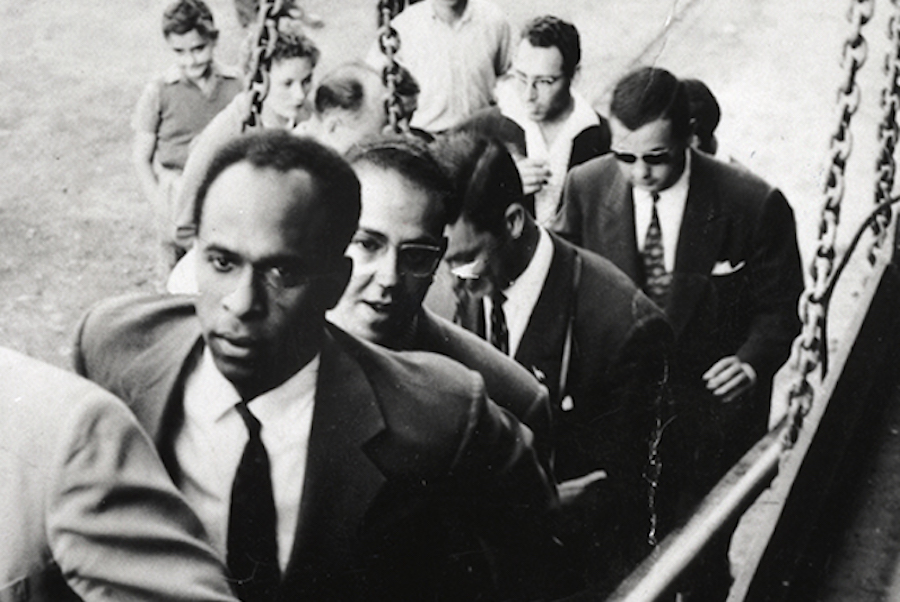
Frantz Fanon is a Martinican philosopher, psychiatrist, and revolutionary who wrote on race and racism. (Frantz Fanon Archives)
The renewed protests against racism and police brutality over the last year have supplied a fresh impetus for thinking about the nature of capitalism, its relationship to racism, and the construction of alternatives to both. Few thinkers speak more directly to such issues than Frantz Fanon, the Martinican philosopher, psychiatrist, and revolutionary who is widely considered one of the twentieth century’s foremost thinkers on race and racism.
Fanon had direct experience of French colonial rule, from the Caribbean to North Africa, and brought that experience to bear on his intellectual work. He played an active role in the Algerian revolutionary movement that struggled for independence in the 1950s, but he warned that independent African states would simply replace the colonial system with a national bourgeoisie unless they followed the path of social revolution.
Some of Fanon’s key works have been available in English translation for many years. However, the recent publication of over six hundred pages of Fanon’s previously unavailable writings on literature, psychiatry, and politics makes this a fitting moment to reexamine his thought anew.