The US Agriculture System Is a Disaster for Farmworkers and the Planet
US-style industrial farming has ravaged two of the world’s most fertile regions, California’s Central Valley and the Midwest’s corn belt. But we can build an agriculture system that delivers food in a sustainable way — and empowers farmworkers, too.
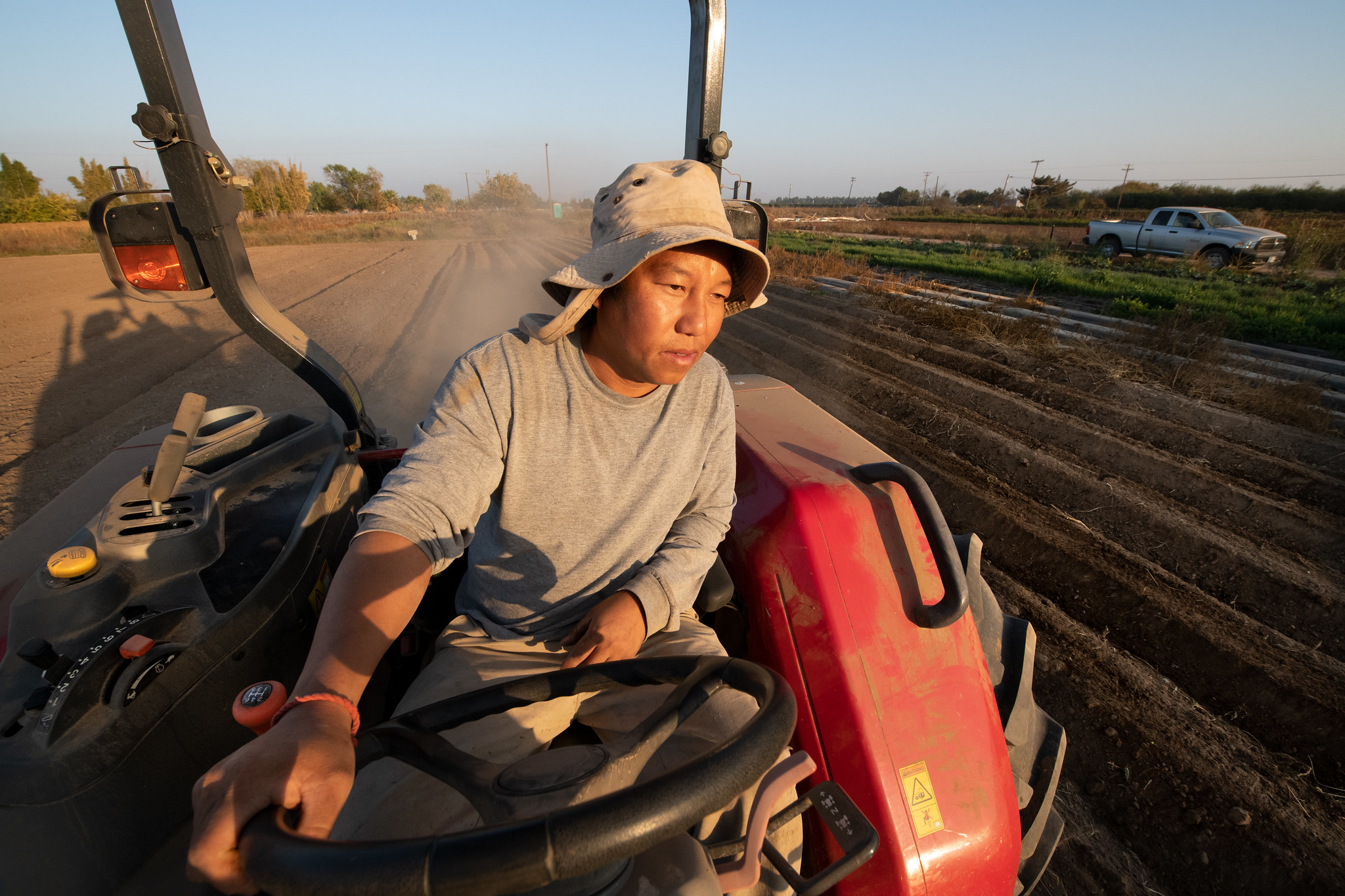
Vue Her is a farmer on a ten-acre field in Singer, California. (US Department of Agriculture / Flickr)
It’s hardly breaking news that US-style industrial farming can pump out plenty of cheap, often low-quality food, at enormous environmental and social cost. So great is that cost that the whole system could do itself in fairly quickly.
Tom Philpott, the food and agricultural correspondent for Mother Jones, is just out with a book, Perilous Bounty: The Looming Collapse of American Farming and How We Can Prevent It. Philpott looks at two crucial US growing regions: California’s Central Valley, where roughly a quarter of our food comes from, and the corn belt, where much of our meat comes from.
The Central Valley is running out of water, though it’s also at great risk of being flooded with ten or fifteen feet of water any year now. And the corn belt, one of the most naturally fertile regions on earth, is losing massive amounts of its rich soil to erosion and is punishing the earth with vast amounts of chemical pollution.