“We Need To Be Militant About Telling Our Stories”
There’s a brutal history of US intervention in Central America, culminating in the cruelty of today’s border regime. Salvadoran journalist Roberto Lovato speaks to Jacobin about the amnesia that is taking root, and the need for a militant excavation of personal and collective stories.
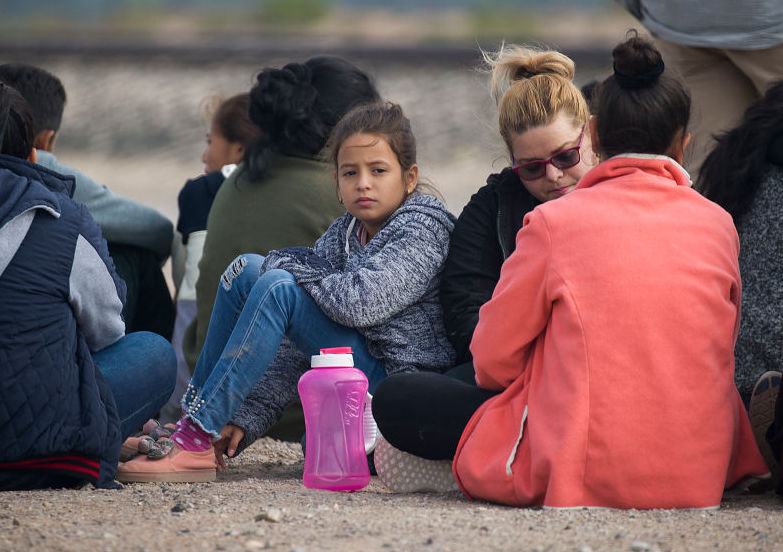
Migrants held by border patrol agents in New Mexico, 2019. (Joe Raedle / Getty Images)
In a new memoir, Unforgetting, journalist and educator Roberto Lovato provides an intimate account of the origins of the contemporary crises of violence and forced migration in Central America. From the United States to El Salvador and back again, the braided, multi-temporal narrative entwines personal and political histories.
Lovato offers sketches of his childhood traveling between working-class San Francisco and San Salvador under dictatorship in the 1970s, as well as his radicalization and militancy in the insurgency that fought the US-backed regime. He uncovers astonishing secrets in his father’s past (no spoilers), providing an autobiographical portrait of imperialist violence and struggle, from the anti-communist wars of the 1980s to the anti-gang policing of the 1990s and 2000s, and the incarceration of migrant families from Obama to Trump.
Below, Jacobin contributing editor Hilary Goodfriend speaks with Roberto Lovato to discuss his book and some of its themes. Their interview reflects on the relationship between memory, repression, and resistance, the exclusion of Central American voices from dominant discourse, and the importance of revolution and solidarity in today’s movements. The interview has been edited for clarity.