How a Poll Tax Becomes a Law
In the lead-up to the November election, states like Florida are ramping up voter disenfranchisement. That disenfranchisement didn’t come out of nowhere — it’s the latest in decades of bipartisan disenfranchisement of poor and working-class voters and voters of color.
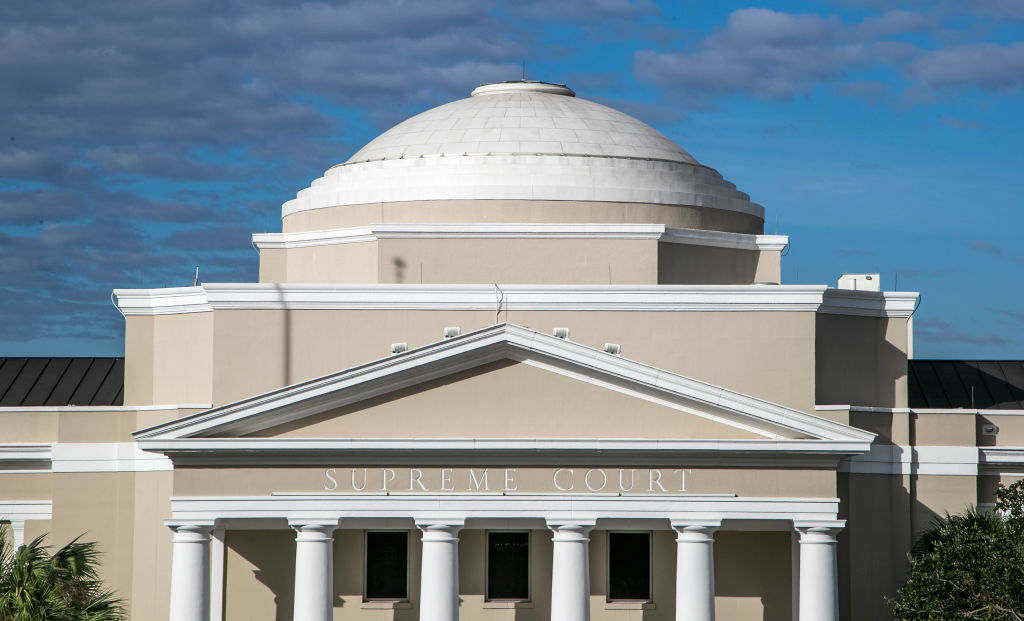
The Florida Supreme Court building in Tallahassee, Florida. (Mark Wallheiser / Getty Images)
“We do not have Obama judges or Trump judges, Bush judges or Clinton judges. What we have is an extraordinary group of dedicated judges doing their level best to do equal right to those appearing before them.”
That is how Supreme Court Chief Justice John Roberts criticized President Trump in 2018 after one of Trump’s many tantrums over federal “Obama judges” blocking his immigration policies. As chief justice, Roberts plays an important role in maintaining the very thinly veiled facade of impartiality and decorum in the courts. That facade is why judges wear robes, why lawyers say “Your Honor,” why at confirmation hearings, to-be-justices say with a straight face that judicial decisions are “never about politics — only the law’s demands,” and why, unlike Trump, proper liberals toe that supposed line.
It’s hard to take this seriously when we all openly talk about the conservative and liberal wings of the Supreme Court. And it gets harder when, two months before the 2020 election, five Trump(-appointed) judges join a Bush(-appointed) colleague to uphold a poll tax on people with felony convictions in a swing state that has disenfranchised approximately a fifth of its black voters.