Queer Liberation Is a Labor Issue
Today, corporations see Pride Month as another chance to sell their products. But the greatest gains for the LGBTQ movement came through fighting corporations, challenging workplace discrimination, and building unions.
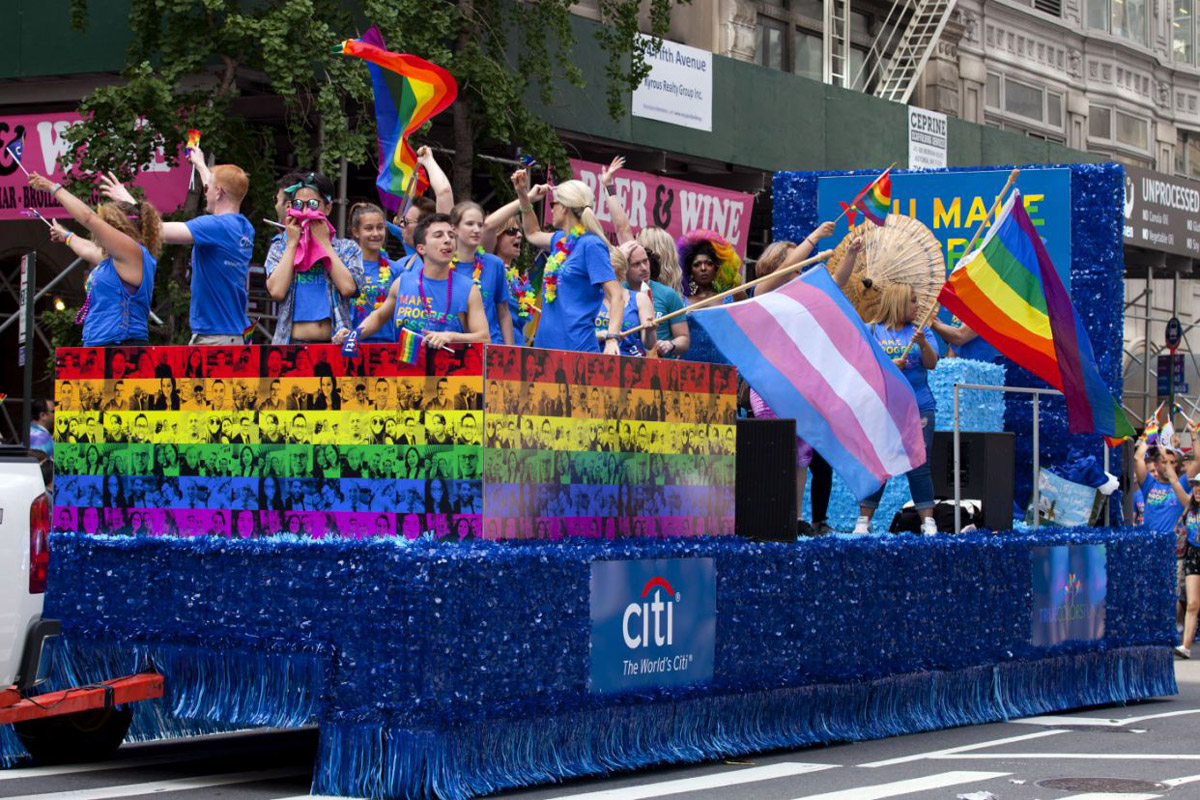
The Citi employee float at the New York City Pride Parade on June 25, 2017. (Getty Images)
Throughout the past few months, activists across the United States have called for kicking cops and corporations out of June’s annual Pride marches. This is the latest chapter in a long struggle to raise the issues of working-class queer people, queer people of color, and other groups that have been left out of the mainstream LGBTQ movement. However, there’s one critical part of this fight that hasn’t gotten as much attention: the history of queer labor activism.
Unions are some of the most powerful vehicles in the fight against workplace discrimination and harassment, and stand as some of the earliest supporters of domestic partnership and, later, marriage equality. Queer workers have played important roles within unions, valiantly fighting against both anti-queer sentiments within unions and union-busting from bosses in queer-majority workplaces. As Pride month comes to an end, this history is more important than ever.
Miriam Frank, author of Out in the Union: A Labor History of Queer America, has interviewed hundreds of queer union members and officials about their struggles at work and beyond. Meghan Brophy, a student-labor activist at Barnard College, interviewed Frank about queer workers’ victories and challenges within the labor movement, the fight to organize queer-majority workplaces, and recent efforts to bring Pride back to its militant origins.