The Supreme Court’s LGBT Decision Is a Victory for the Left, If We Make It One
The Supreme Court is a deeply conservative institution, stocked with conservative jurists. But this week’s Bostock decision was a win for LGBT justice — and it opens up new possibilities for emancipatory change.
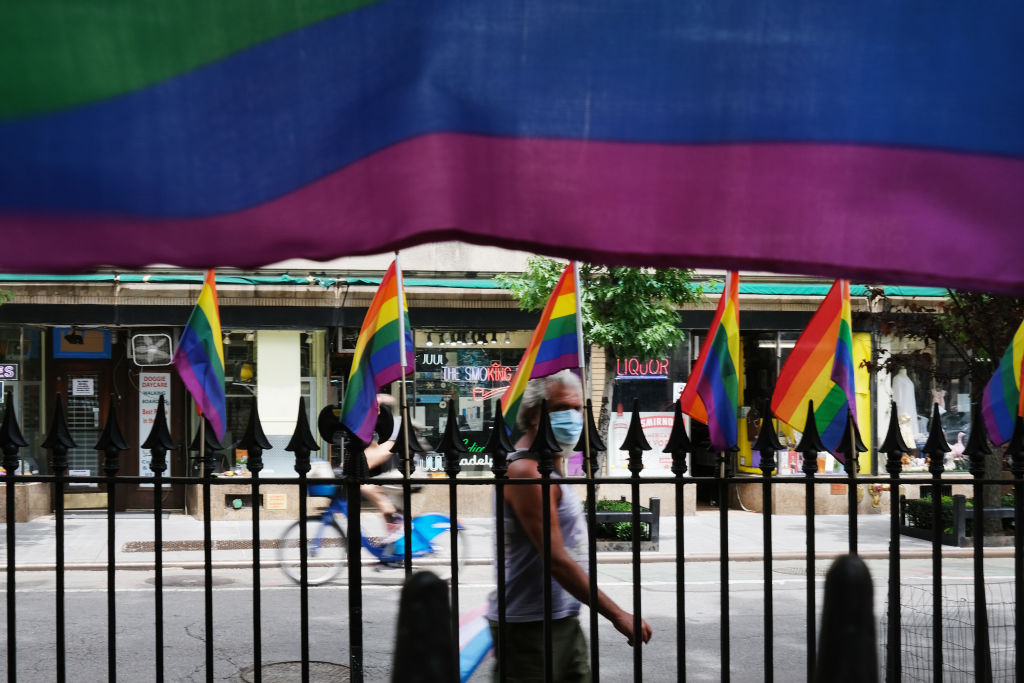
In a landmark ruling, the Supreme Court ruled on Monday ruled that federal civil-rights law protects workers from employer discrimination on the basis of their sexual orientation or gender identity. Photo by Spencer Platt / Getty
On Monday, the Supreme Court ruled that employment discrimination on the basis of sexual orientation or gender identity is prohibited by Title VII of the Civil Rights Act of 1964. The decision brings employment law in line with public opinion: a majority of Americans favor employment protections for LGBT people, and in 2015 the Harris Poll revealed that nearly a quarter of Americans believed that these protections were already enshrined in federal law.
The opinion, like today’s DACA decision, came as a shock to legal observers. The Supreme Court is a deeply conservative institution, currently occupied by five solidly conservative justices. It seemed beyond hope to imagine that a majority would deliver the “landmark ruling” they did, even though advocates stood on extremely solid legal ground: they persuasively applied conservative methods of statutory interpretation to Title VII.
The surprise decision has been met with much enthusiasm, and some skepticism, from supporters of LGBT justice. Make no mistake: the opinion in Bostock v. Clayton County, written by Justice Neil Gorsuch, could have been much better. It should have included language linking the LGBT movement to the broader federal civil rights framework, acknowledging the history of discrimination against LGBT people. Instead, we got a skeletal affirmation, that in formalist textual terms, means sexual orientation– and gender identity–based discrimination qualify as discrimination “because of sex.” (Courts have already ruled that the law prohibits discrimination on the basis of sexual stereotypes, but Justice Gorsuch reasoned from the meaning of the words “because of sex,” and found that discrimination against gay, lesbian, and transgender individuals is always rooted in bias about sex.)