Our Path Forward After Bernie Must Include Rank-and-File Unionism and Class-Struggle Elections
Bernie Sanders lost in large part because we lacked the strong working-class and leftist institutions needed to defeat the establishment. Key to rebuilding those institutions is waging more class-struggle electoral campaigns and ramping up rank-and-file labor organizing.
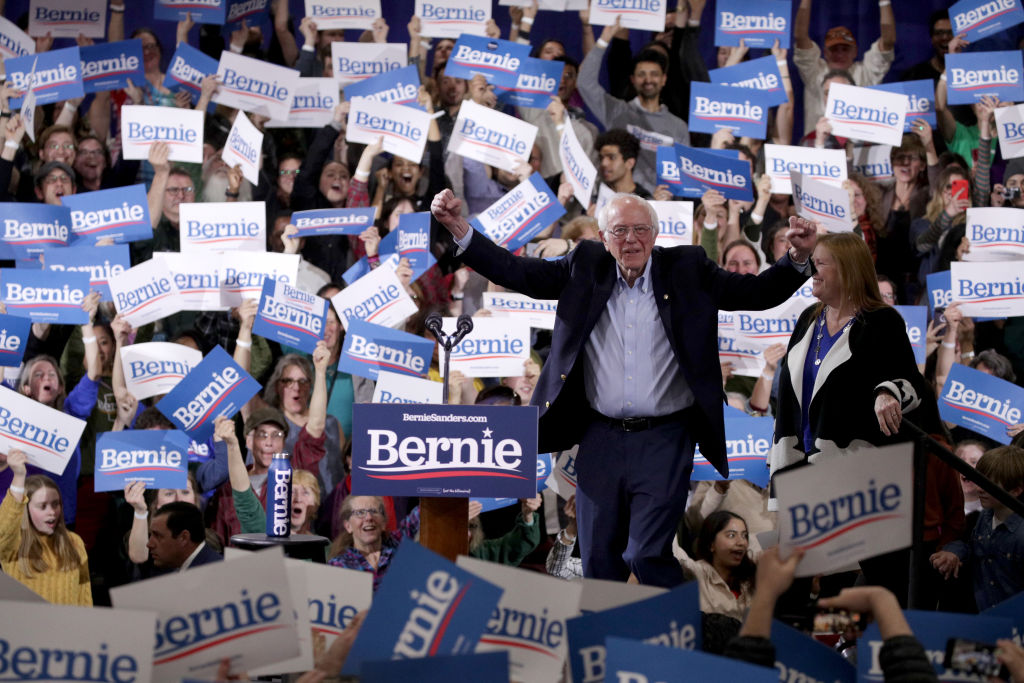
Sen. Bernie Sanders greets supporters at his Super Tuesday night event on March 3, 2020 in Vermont. (Alex Wong / Getty Images)
With the Bernie 2020 campaign behind us, socialists and progressives face a question of where to focus our energies in the coming years. As urgent fights against racist police violence, COVID-19–inspired austerity, the Right’s assault on immigrants, and the fossil fuel industry’s unrelenting march to climate catastrophe demonstrate, there is a desperate need for the Left to grapple with long-term questions about how to build a movement that can successfully challenge the ruling class and bring about a more just, free, and equal society.
After working on the Bernie 2020 campaign for ten months as a member of the National Organizing Team and reflecting on the outcome of the race and the broader state of the Left, I think two points have become clear. First, that Bernie lost in large part because we lacked the strong working-class institutions needed to go toe-to-toe against the establishment. Second, that we can build those institutions by waging class struggle elections and ramping up rank-and-file labor organizing.
Power Imbalance
A closer look at why Bernie lost helps shed some light on where we go from here. There are plenty of campaign autopsies out there, claiming that Bernie’s platform and message were either too radical or not radical enough; others argue that lack of accountability to or investment in paid field staff fundamentally held the campaign back from a potential victory.