Ending “Endless War” Can’t Just Become an Empty Slogan
A consensus is growing that the worldwide post–9/11 “forever war” must come to an end. But that goal is in danger of being watered down to the point of meaninglessness by politicians and think tanks still in thrall to the national security state and its war on terror.
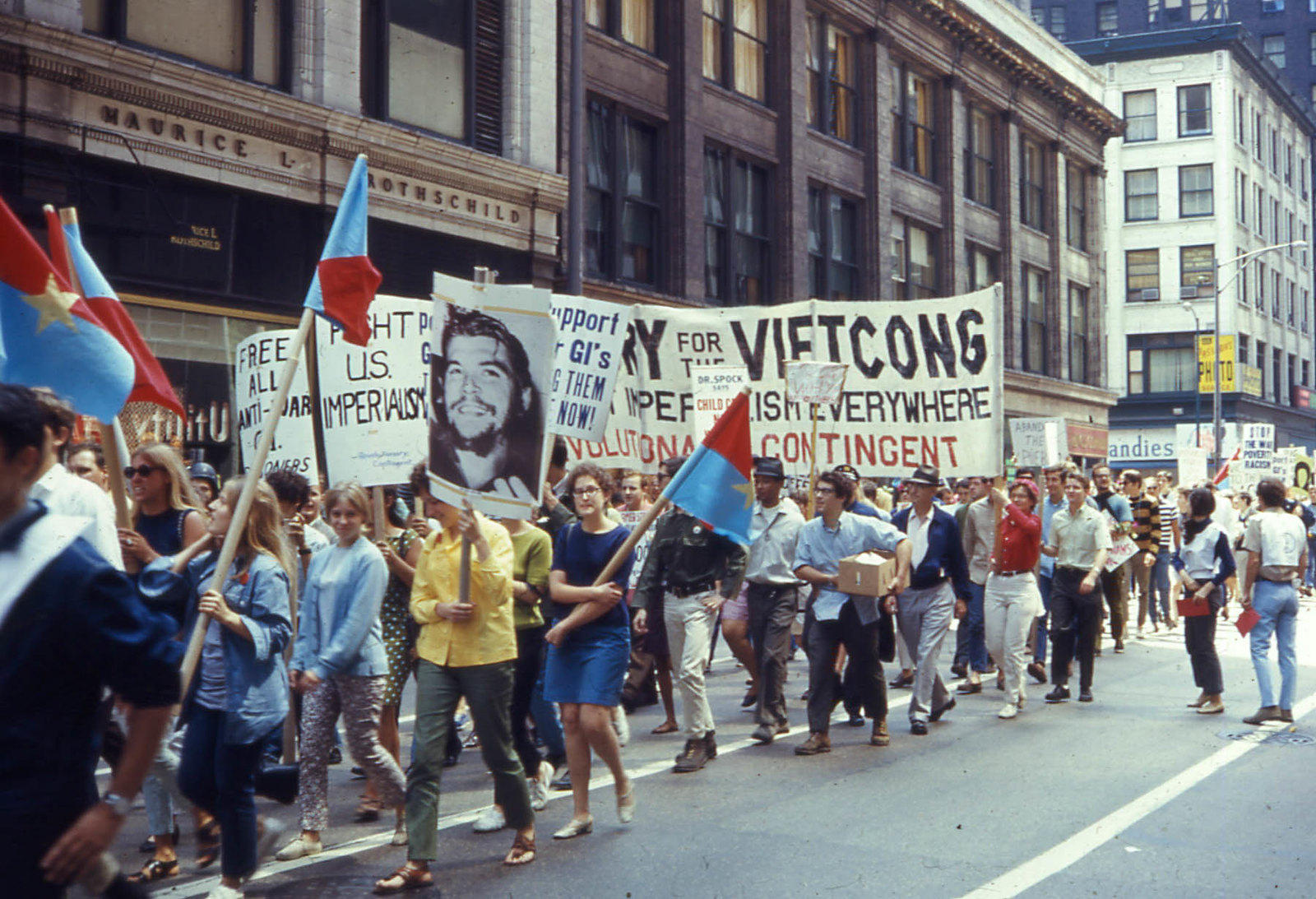
An anti-war demonstration in Chicago, Illinois on August 10, 1968. David Wilson / flickr
Call it war fatigue, call it a realization of a mistake, or just call it a strategic repositioning, but it is clear that “endless war” is no longer considered de rigueur in Washington. The latest CNN/Des Moines Register presidential debates attempted to tease out exactly what the Democratic candidates meant by repeatedly saying, “We must end endless war,” in campaign rallies and in speeches. To the media, this becomes flattened; both Donald Trump and the Democrats say they are doing it — but who is right?
President Trump seems to favor the slogan when it suits him (particularly to cover whatever made him withdraw troops in Syria, thereby give the green light to Turkish president Recep Tayyip Erdoğan to invade), but it hasn’t stopped him from expanding presidential war powers or taking us to the brink of a major conflict with Iran. He has also ramped up strikes in Afghanistan, resulting in more civilian casualties, and expanded the drone war and aerial bombings, including rolling back some Obama-era reforms. His obsession with dismantling Barack Obama’s legacy has turned a relatively constructive relationship with Iran into an escalating confrontation. Trump is not ending endless war, no matter how much the media portrays him as wanting to rein in our military misadventures abroad.
There seems to be major disagreement about what ending “endless war” or the “forever war” means. Taken simply, it would mean repealing the 2001 and 2002 Authorization for Use of Military Force (AUMF), which give legal authorization to the president to deploy troops and use drone attacks in areas of conflict from the Philippines to Mali. It certainly means ending the war in Afghanistan, the United States’ longest war. But in a larger sense, it requires a shift in US activity in the world, from a state of constant and endless war toward an attempt at peace. Politicians have been talking out of both sides of their mouth when prescribing and carrying out policy while deploying the phrase — they want to use the popularity of the idea without the rupture of policy change. They want to have their proverbial cake and eat it, too. This has been evident in the Democratic presidential primary.