Manolis Glezos, 1922–2020
Manolis Glezos was just 19 when he sparked Greece’s anti-Nazi resistance by tearing down the swastika from the Acropolis. This was the beginning of a life dedicated to the cause of the oppressed — in which, as he put it, “No struggle for what you believe in is ever futile.”
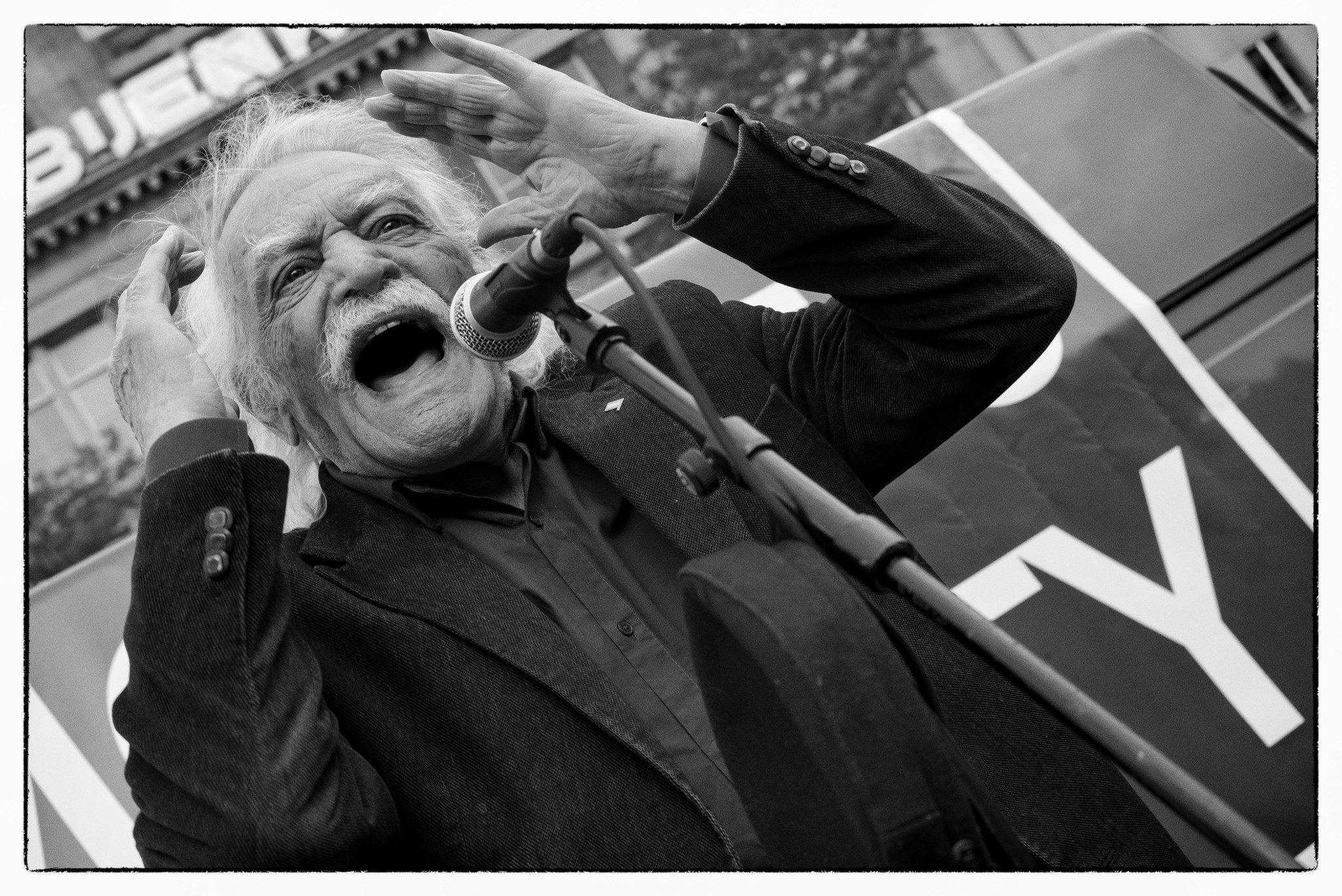
Manolis Glezos in June 2015. Guido van Nispen / flickr
Manolis Glezos’s long-standing comrade Chronis Missios reflected the melancholia of many on the Left when he entitled his memoir “Lucky You Died Young.” His title referred to the “luck” of those fellow communists who had died early enough to avoid seeing their hopes of a post-capitalist future brutally defeated. Manolis Glezos was not one of those who died young — in his ninety-seven years, he saw the frustration of many dreams, from the crushing of the Greek left in the late 1940s to the capitulation by Syriza in summer 2015. But these defeats never made Glezos give up. He strongly believed that “No struggle for what you believe in is ever futile” — a maxim that guided him till his last days.
Glezos was born in 1922, as battle still raged over Greece’s borders following the end of World War I. A son of the small village of Apiranthos on the island of Naxos, by his teens, his family had moved to Athens. In the Greek capital, his political involvement began during his high school years, through his participation in youth anti-fascist organizations. This was an activism in which he persisted, with growing political consciousness, after the beginning of the Nazi occupation of Greece in April 1941.
Aged just nineteen, on May 30, 1941, Glezos and his comrade Apostolos Santas pulled off the action that put their names in the history books when they tore the swastika flag down from the Acropolis. This action symbolically signaled the beginning of the Greek resistance against the Axis powers — and also inspired people around the continent to take up the struggle against the Nazis. The Free French leader Charles de Gaulle would even characterize Glezos as “Europe’s first partisan.” Yet, as the Greek communist insisted, this was no one-off feat, but just one expression of a struggle that guided his whole existence.