Joe Biden Jumped at the Chance to Help George W. Bush Sell the Invasion of Iraq
After September 11, George W. Bush decided to blaze a path of death and destruction in Iraq by invading. He was given crucial assistance by Joe Biden.
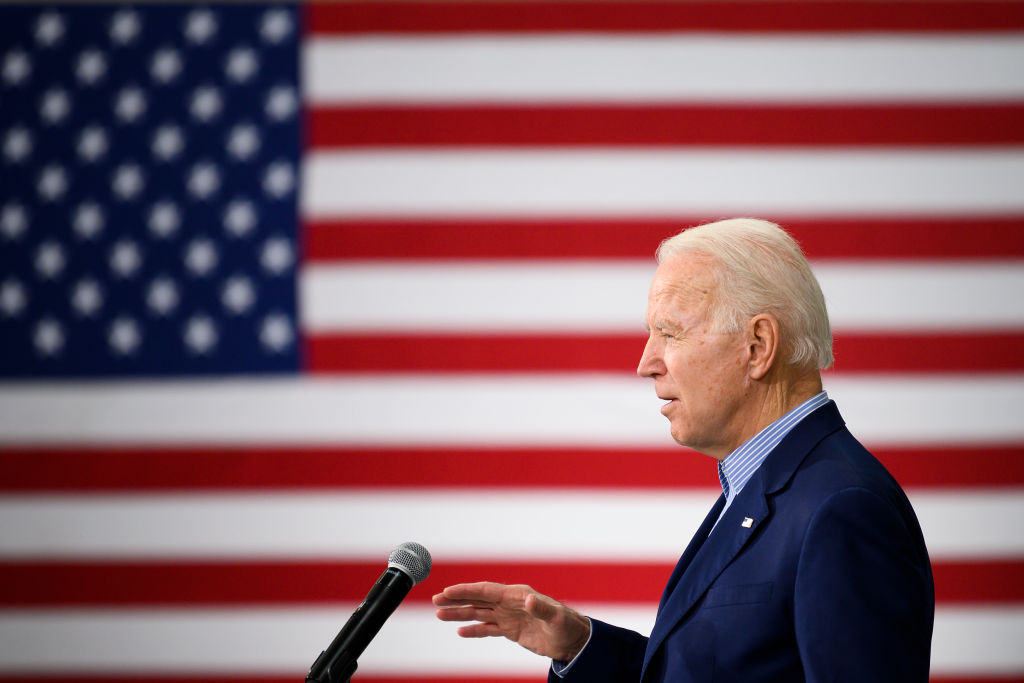
Democratic presidential candidate Joe Biden speaks at a town hall meeting in Sumter, South Carolina, on February 28, 2020.Jim Watson / AFP via Getty
In Iraq, we cannot afford to replace one despot with chaos.
— Joe Biden, December 2002.
It was January 2002, and fate had yet again conspired to let Joe Biden shape the course of history. His initial hesitancy to take the Judiciary Committee chairmanship back in 1987 had been seemingly vindicated by the never-ending gauntlet of intense scrutiny, pressure, and criticism he ran for the next nine years. Fed up with the job by the 1990s, he had gladly relinquished the top spot midway through the decade, leaving him free for other responsibilities. Having sat on the similarly prestigious Foreign Relations Committee since 1975, an investment by the Democratic leadership in the brash, young senator from Delaware, he was about to serve his first full year as its chairman.
Biden was in a thorny position. It was just four months after the September 11 attacks had allowed the previously flailing President George W. Bush to ride a wave of anger, grief, and militaristic nationalism to soaring poll numbers, fundamentally reorienting US foreign policy toward what nonsensically came to be known as the “war on terror” along the way. Biden, fiercely critical of Bush’s foreign policy the previous year, had two choices: he could use his new position to stymie Bush’s alarming plans; or, as the Wilmington News Journal put it, he could “downplay differences, smooth the way for the president’s agenda and cede the foreign policy headlines to the administration.” Looking, no doubt, at Bush’s triumphant approval ratings and at his own impending reelection, he chose the latter.