Who’s Afraid of Karl Marx?
- Todd Chretien
Brazil’s far-right president Jair Bolsonaro stokes his base’s fears by warning of the “communist threat” posed by “cultural Marxism.” But if you don’t make a living off exploiting workers, there’s no reason to be afraid of Karl Marx and his friends.
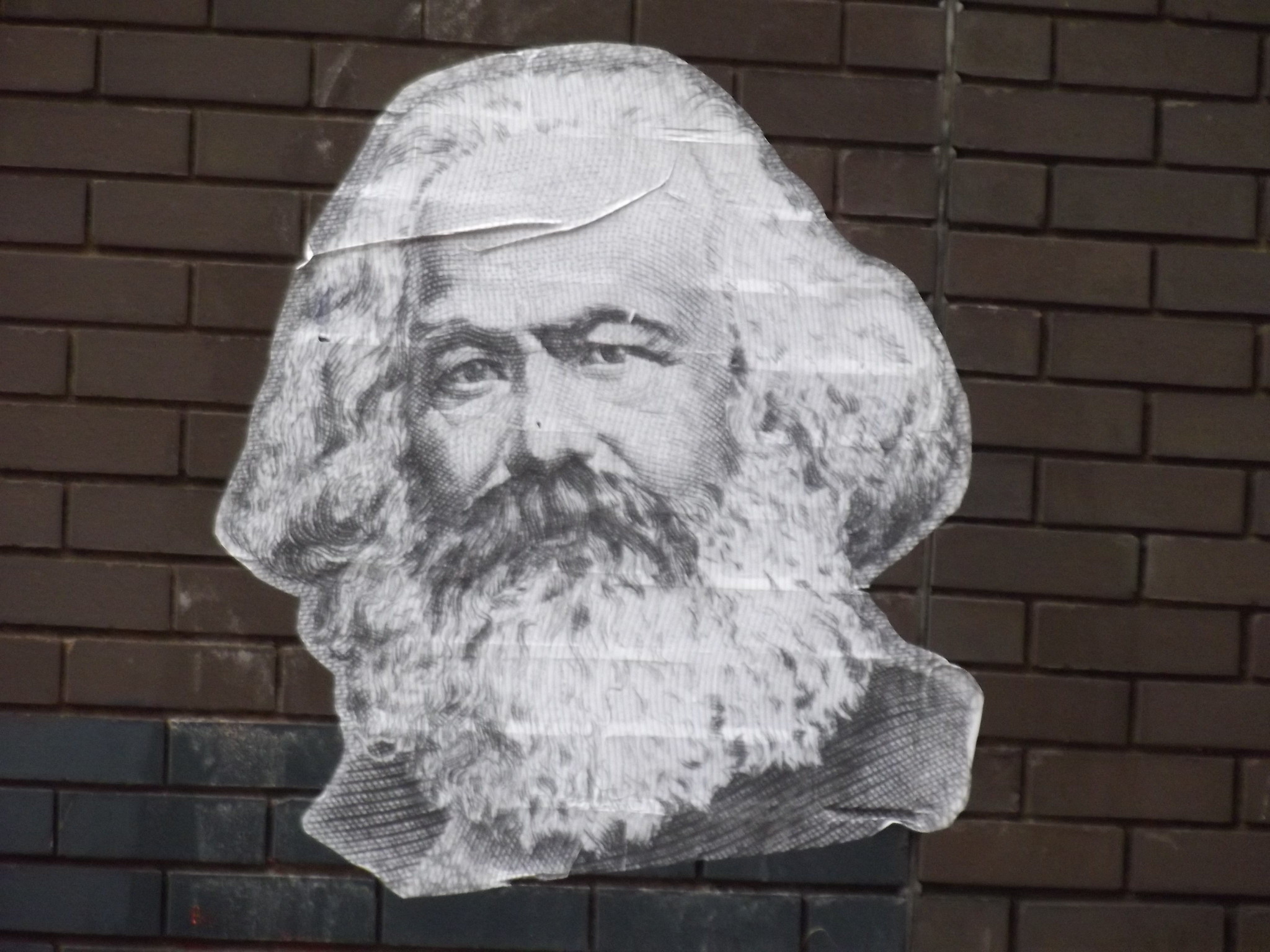
Karl Marx, Easy Row Subway at Fletchers Walk, Birmingham, June 2014.Elliott Brown / Flickr
A specter is circling the planet. And the powers that be have united in an unholy alliance to keep it from sight — from evangelical preachers to the tsars of the economy, from Steve Bannon to Bolsonaro’s guru Olavo de Carvalho, and from neoliberals to militiamen.
According to this alliance, anyone who does not fit into their conservative political project must be a Marxist. Since 2013, there isn’t an opposition party to be found that the sitting government hasn’t accused of “Marxism.” In their opponents’ eyes, feminists and LGBTQI movements, ecologists and human rights activists, museum curators and performance artists, academic researchers and religious Afro-Brazilians appear as one homogeneous bloc. Marxism has thus been recognized by its enemies as a power unto itself, but not just any kind of power — a conspiracy.
Yet it’s not so easy to reduce all history to paraphrases from the Communist Manifesto. And as we see today, the ideologists doing battle with “Gramscianism” or “cultural Marxism” are fighting something very different than the theoretical framework of Karl Marx and Friedrich Engels.