What the US Sanctions Against Venezuela Have Wrought
The United States's sanctions against Venezuela continue to punish ordinary Venezuelans while deepening the country's political crisis. They need to end.
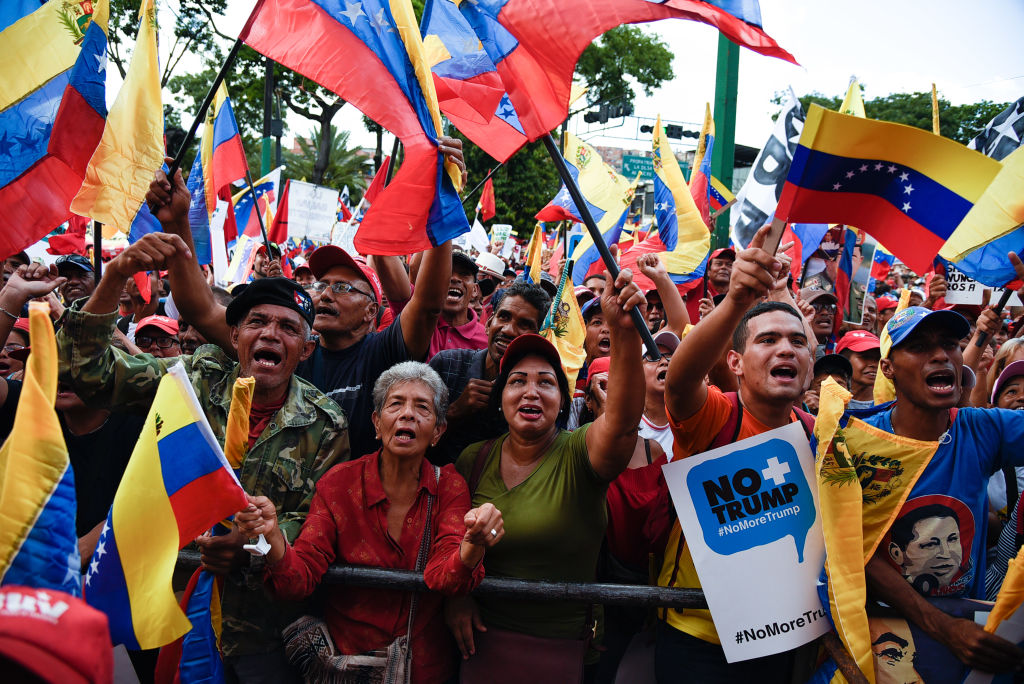
Pro-government supporters shouting during an anti-Trump demonstration on August 10, 2019 in Caracas, Venezuela. (Carolina Cabral / Getty Images)
In early August, the Trump administration ramped up economic sanctions on Venezuela, freezing foreign assets and blocking companies from doing business with the Maduro government. As was to be expected, the executive order was accompanied by grandstanding by members of the Trump administration who argued that the move would “accelerate a peaceful democratic transition.”
These new sanctions made quite the boom when announced, and understandably so. David Smilde, senior fellow at the Washington Office on Latin America, has described similar, but less extensive, sanctions as a “nuclear” option. In the following weeks after the order was issued, a flurry of reports and opinions were published, speculating on the sanctions’ potential long- and short-term economic impacts.
On the ground, the new round of sanctions accelerated disparities between the US dollar and the bolívar soberano on the black market. In late July, the exchange rate hovered around 8,000 bolívares per dollar. By late August, this had risen to 20,000 bolívares. Using this black-market rate, minimum wage in the country is now at two dollars a month.