Eleven Theses on Venezuela
US policy towards Venezuela is not motivated by a concern for democracy or human rights. And its arrogant intervention is making the country's humanitarian crisis even worse.
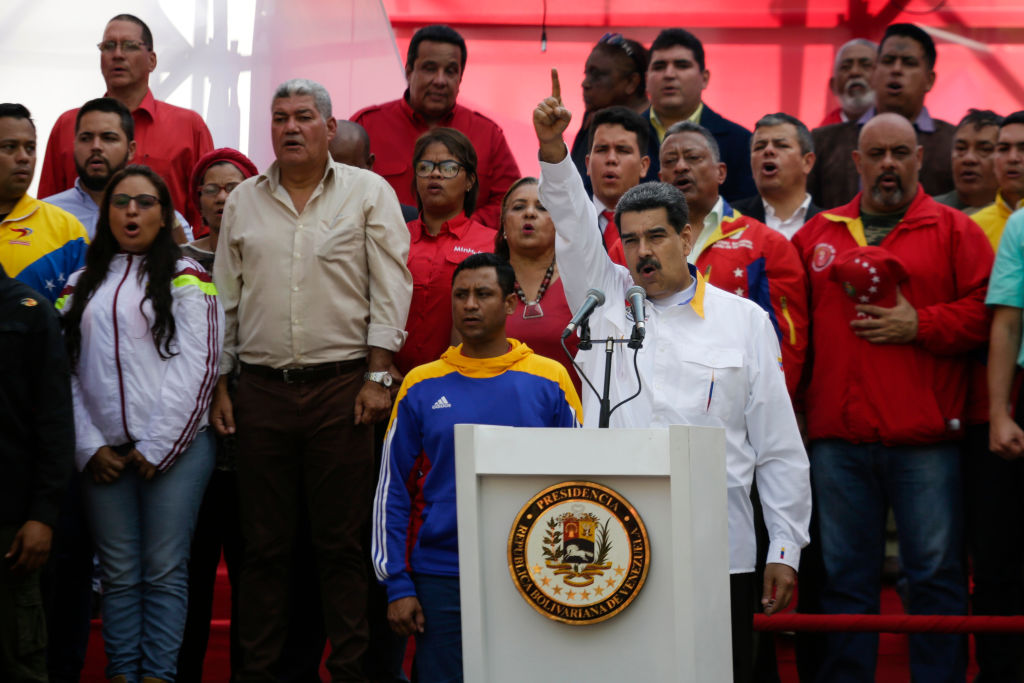
President of Venezuela Nicolás Maduro speaks during a demonstration by Partido Socialista Unido de Venezuela (PSUV) at Palacio de Miraflores on May 20, 2019 in Caracas, Venezuela.Eva Marie Uzcategui / Getty
1.
Venezuela is experiencing a profound humanitarian crisis. Any attempt to deny as much is abhorrent as it ignores the massive suffering of the Venezuelan people.
2.
The crisis has all but obliterated the undeniable and impressive social gains achieved between 2003 and 2013, when Venezuela saw massive reductions in poverty and inequality and dramatically improved living standards. The crisis has also severely eroded Chavismo’s equally impressive and undeniable political gains, such as the significant (albeit uneven) empowerment of swaths of society previously excluded from politics. We should recognize these losses without surrendering to the narrative that proclaims Chavismo was doomed to fail from the beginning. This narrative must be rejected not only because it is false, but also because it is part of a broader reactionary project of demonizing Chavismo and the left project of building a better world. We must also reject the narrative that Chavismo is “dead.” While severely battered, the popular movements that are the beating heart of Chavismo have not disappeared: these movements continue to fight, and will be vitally important in determining the future of Venezuela.
3.
The origins of the crisis are complex and involve a mix of long-, medium-, and short-term factors, including: Venezuela’s century-old dependence on oil, which is in turn a legacy of the capitalist world order and Venezuela’s peripheral position within this order; flawed government measures, particularly related to currency policy, which fostered corruption estimated to exceed many hundreds of billions of dollars; government repression of peaceful protest and dissent amid a broader turn away from political democracy and towards authoritarian rule; opposition actions such as speculative hoarding of goods, killing of civilians and government personnel, and intentional damage to public infrastructure and resources, including medical facilities and stored food; US government actions, including overt and covert support for the most violent sectors of the opposition, and the direct and indirect effects of sanctions, which since at least 2015 have deprived the government of significant funds, mostly by denying it access to international credit markets.