Yes, the United States Needs to Withdraw From Afghanistan
When President Trump scuttled talks for a peace deal in Afghanistan, liberal media heaved a sigh of relief. But despite the risks, an end to the US occupation is a precondition for peace in the country.
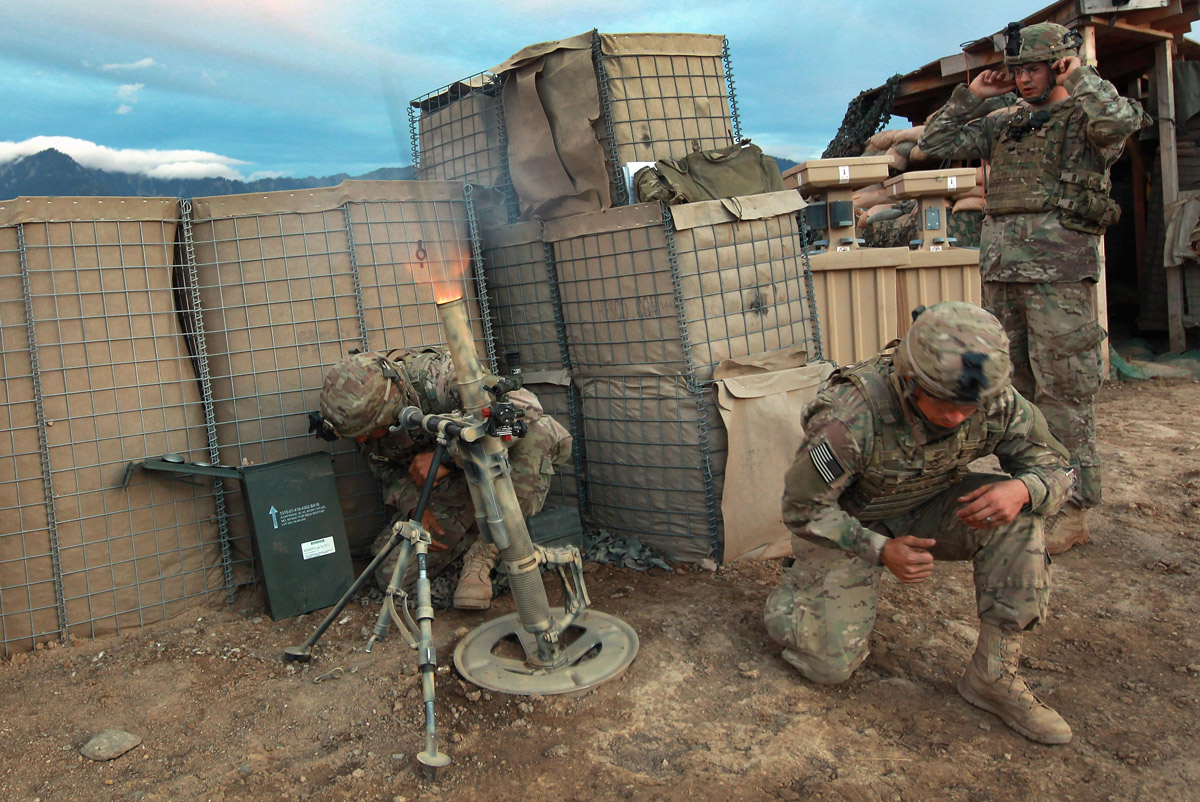
Men from the US Army fire on a Taliban position from Observation Post Mustang on September 2, 2011 in Kunar Province, Afghanistan. (John Moore / Getty Images)
On February 14, Adil Ahmed Dar, a Kashmiri-origin suicide bomber, rammed his explosives-laden truck into an Indian military convoy in the Pulwama district of Kashmir Valley. The attack triggered India-Pakistan skirmishes. It was the most deadly attack since 1989 on Indian forces, claiming over forty lives. The suicide bomber was inspired by the Taliban victory over the United States in Afghanistan. This “inspiration” was flagged by the suicide bomber himself in a pre-recorded video message released soon after the incident by the militant outfit Jaish-e-Muhammad.
Attacks like this haunted observers of the now-scuttled US-Taliban negotiations. Won’t a US withdrawal unleash a renewed wave of fundamentalist terror emboldened by a victory over the United States as was the case after the Soviet withdrawal from Afghanistan? Most importantly, won’t Afghanistan plunge into a new spiral of civil war once the US forces pull out?
The talks came to an abrupt end on September 8 when President Trump, in a series of tweets, scuttled the process after “an attack in Kabul that killed one of our great great soldiers.” Thousands of Afghans killed during nine rounds of US-Taliban negotiations did not merit any tweet.