Elizabeth Warren’s Strategy Within the Democratic Party Is All Wrong
Anyone who wants to enact "big, structural change" will find themselves stymied by the Democratic Party establishment. So why is Elizabeth Warren cozying up to that establishment?
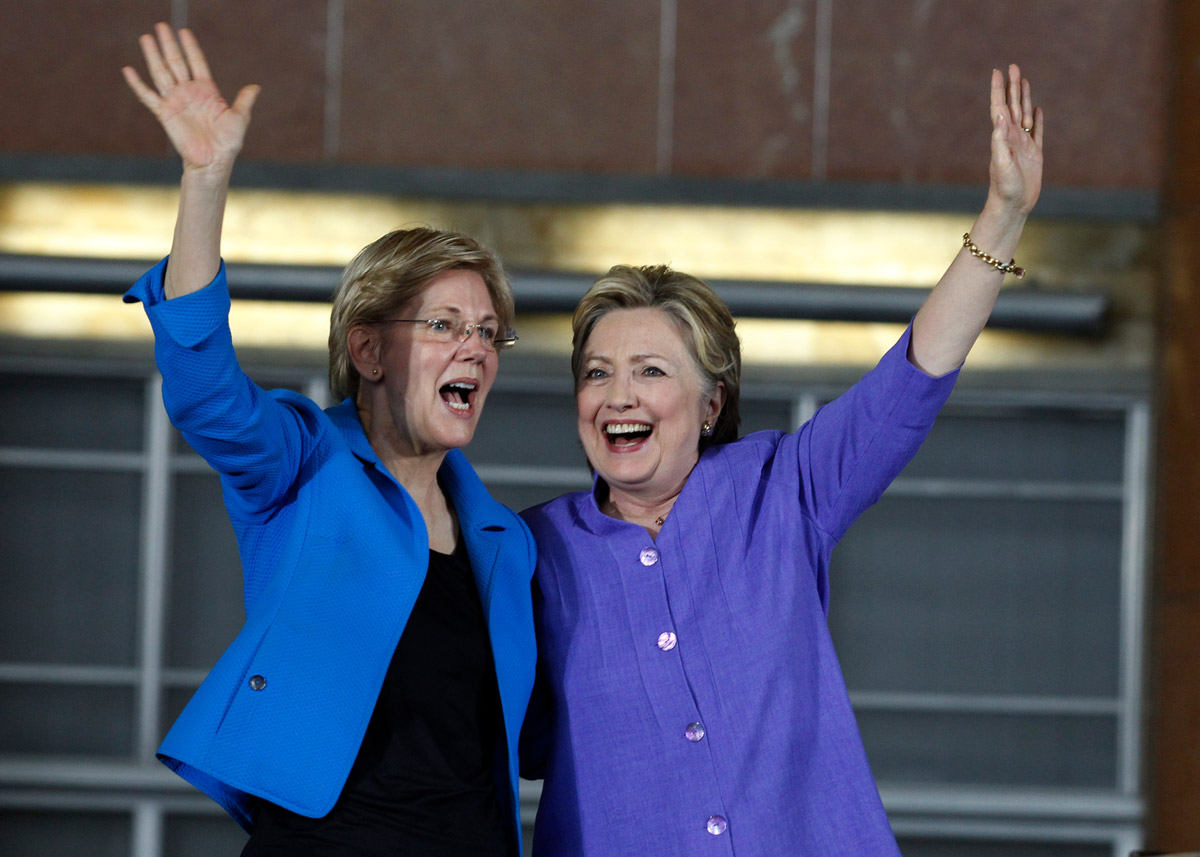
Hillary Clinton and Elizabeth Warren wave to the crowd before a campaign rally at the Cincinnati Museum Center at Union Terminal on June 27, 2016 in Cincinnati, Ohio. (John Sommers II / Getty Images)
With Joe Biden steadily losing ground to his more progressive rivals, the fight for the Democratic presidential nomination is increasingly shaping up into a contest between competing theories of change. As Bernie Sanders continues his ongoing battle with the party establishment, looking to “transform” the party from outside, Elizabeth Warren is reportedly attempting to win over party elites. The New York Times’s Jonathan Martin reports that she is telling party leaders that “far from wanting to stage a ‘political revolution’ in the fashion of Mr. Sanders, she wants to revive the beleaguered Democratic National Committee and help recapture the Senate while retaining the House in 2020.” And on Saturday, NBC News reported that Warren has been speaking with 2016 Democratic nominee Hillary Clinton since announcing her campaign, though little is known about their communications due to the “political sensitivity” involved.
Yet for Warren, who like Sanders intends to enact “big, structural change” in US politics, this strategy presents risks. A survey of Warren’s history working with the Democratic Party and emails hacked from Clinton campaign chair John Podesta by Russian agents and released by WikiLeaks in 2016 suggest the limits of such a nonconfrontational approach to party elites.
In 2015, Warren, elevated in 2014 to a leadership position within the Democratic Party as strategic policy adviser to the Democratic Policy and Communications Committee, faced a choice of how to engage with the party. On the one hand, she could listen to the demands of the party’s base and progressive activists and go to battle with the Democratic establishment by challenging presumptive nominee Hillary Clinton. On the other, she could stay out of the race, continue to build her clout in Congress, and work to push Clinton left through a process of sustained diplomatic outreach. Warren opted for the latter.