How a Telephone Workers’ Strike Thirty Years Ago Aided the Fight for Single Payer
Thirty years ago this summer, 60,000 telephone workers walked off the job in New York and New England — and stayed out for seventeen weeks. Their struggle against NYNEX, a telecom giant, became one of labor’s few big strike victories, during a decade that began with the disastrous defeat of PATCO, the national air traffic controllers union.
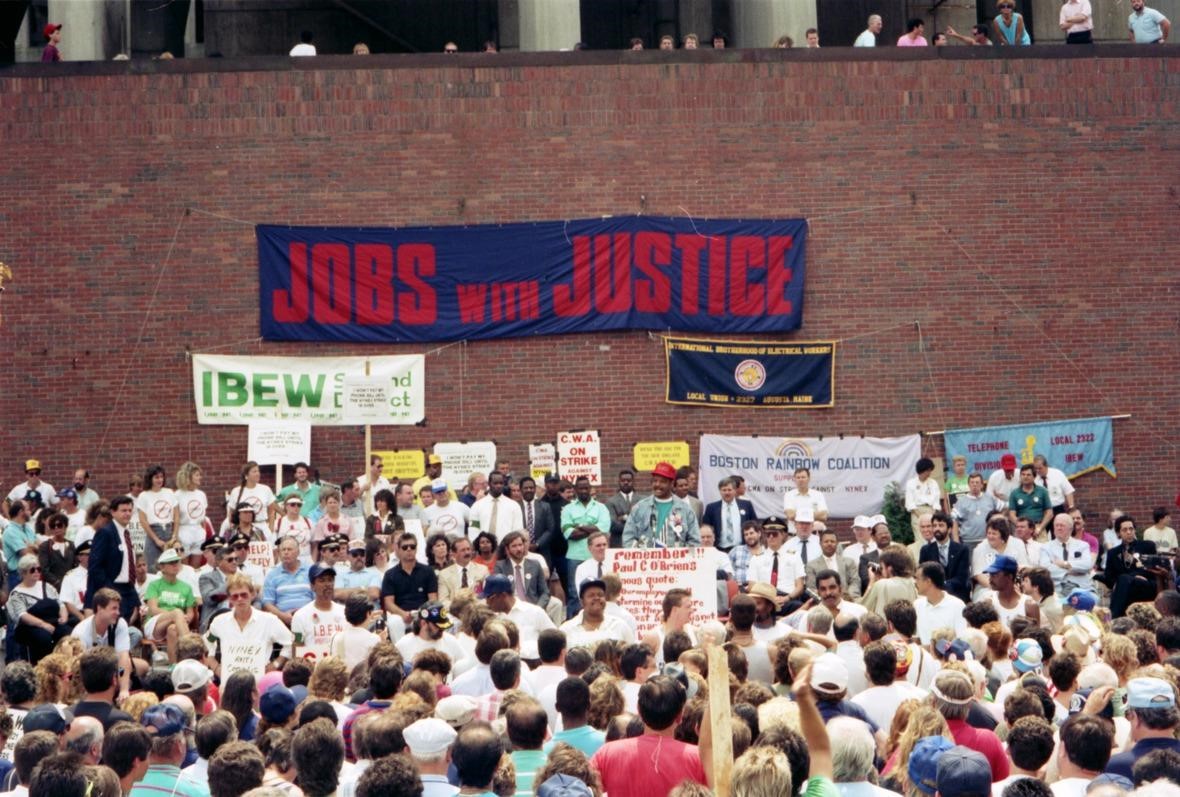
Mass rally and march for telephone workers’ strike, Boston, 1989.(Courtesy of authors)
Thirty years ago this summer, 60,000 telephone workers walked off the job in New York and New England — and stayed out for seventeen weeks. Their struggle against NYNEX, a telecom giant, became one of labor’s few big strike victories, during a decade that began with the disastrous defeat of PATCO, the national air traffic controllers union.
Within the Communications Workers of America (CWA) and the International Brotherhood of Electrical Workers (IBEW), the model of membership mobilization and workplace militancy developed in 1989 has been used, to varying degrees, in every regional contract campaign they’ve conducted since then.
Telephone workers in the northeast, employed at successor firms of NYNEX (including Verizon) or AT&T, have struck seven times during that period, over a variety of regional and national issues. (For more on their recent disputes, see Dan DiMaggio, at New Labor Forum).