There’s Still Power in a Strike
If workers refuse to work, the bosses can't produce anything. If soldiers refuse to fight, the generals can't wage wars. That's the power of a strike.
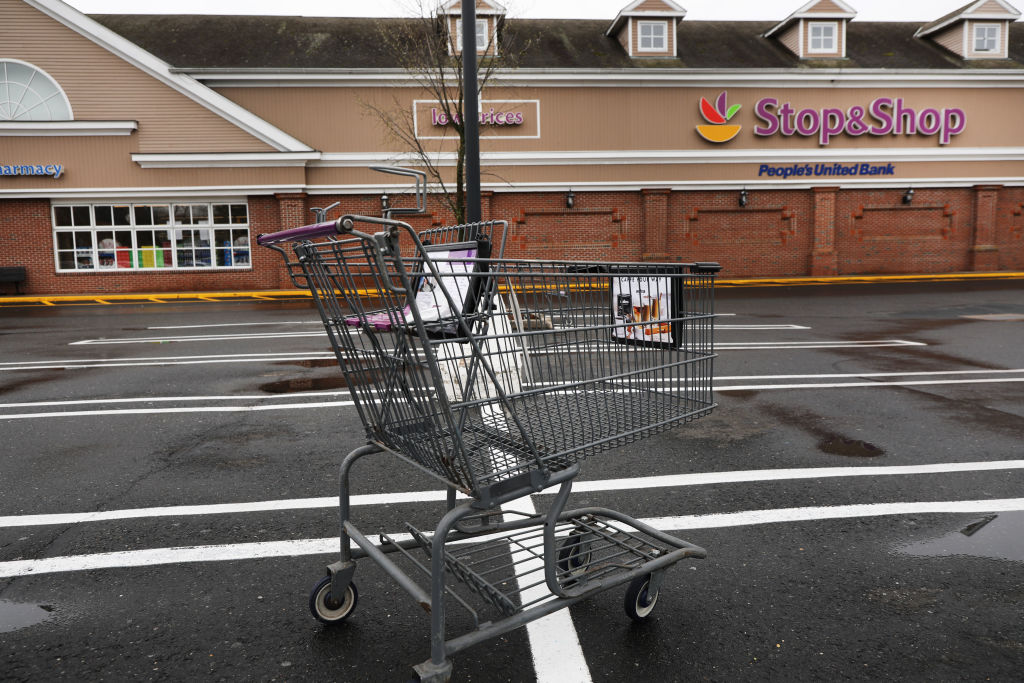
Stop & Shop carts sit in an empty parking lot outside of one of the grocery stores on April 20 in Westport, CT during the recent strike. Spencer Platt / Getty
On April 11, thirty-one thousand workers at Stop & Shop supermarkets throughout New England walked away from their delis, checkouts, and storerooms to form picket lines outside their stores. Their action, which lasted until a tentative deal was reached last Sunday, is the largest private-sector strike in the US in several years. It follows a year of notable unrest, in which steelworkers, Marriott hotel employees, and public school teachers in West Virginia, Oklahoma, and beyond all boycotted work to force concessions from employers.
As historian Jeremy Brecher can attest, such actions might be unusual by recent standards, but they have deep precedent in American history.
In 1972, Brecher, a writer and New Left activist, published the book Strike!, which went on to become a classic of labor history. At the time there was little like it available for readers who wanted a popular account of the country’s tumultuous legacy of class struggle. The books that did exist tended to focus on the institutional formation of different unions or the lives of top leaders.