The Flint Militants
Eighty years ago, the Flint Sit-Down Strike showed the power of a determined rank and file and a class-conscious leadership.
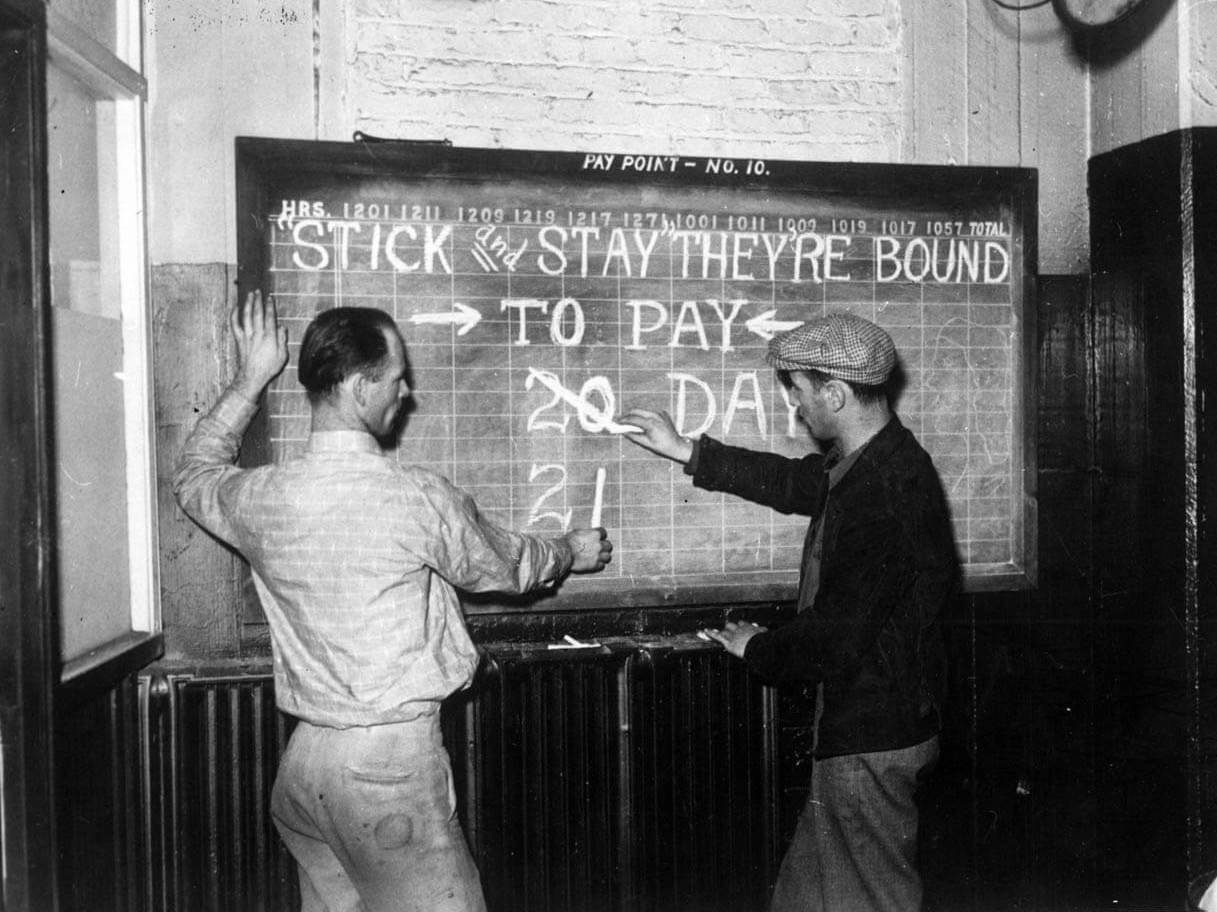
Workers keep a calendar during the Flint Sit-Down Strike. Walter Reuther Library
On February 8, 1937, John L. Lewis, leader of the fledgling Committee of Industrial Organizations (CIO), met with Frank Murphy, the newly elected governor of Michigan.
Just over a month earlier — and just two days before Murphy started his term — hundreds of autoworkers had seized two General Motors (GM) plants in Flint, paralyzing the massive corporation’s production line. The workers’ new tactic — the sit-down strike — was threatening to fundamentally change the balance of power between workers and management.
Recognizing what was at stake, GM cut the heat to the occupied plants, hoping the cold would break the sit-downers’ morale. But the strikers were determined to stay. They sent Murphy a defiant telegram in response to rumors that he might mobilize the National Guard to evict them, announcing that they would be pulled out dead before they walked out on their own.