The Highlander Idea
For decades, the Highlander School has nurtured some of the most important radical movements by pushing a simple idea: ordinary people can act as agents of change. It's an idea that's threatening to the Right — and it should be.
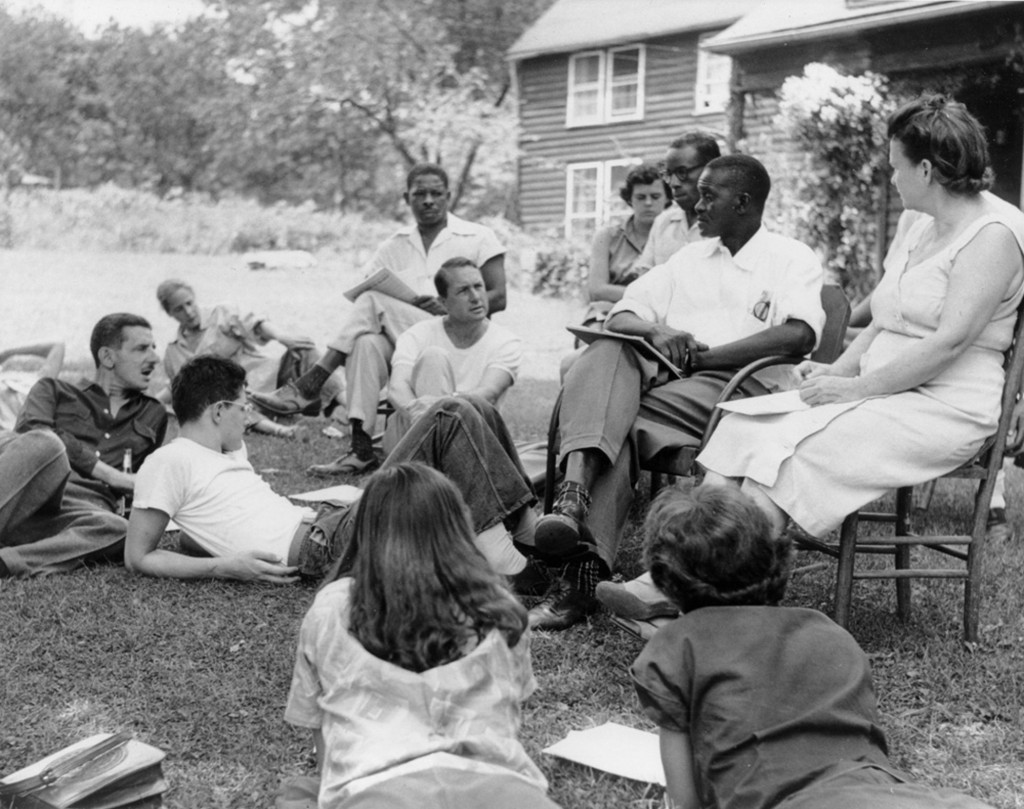
A Highlander Folk School workshop, date unknown.
In 1932, coal miners in Wilder, Tennessee went on strike. Wilder was a company town, and the company — Fentress Coal and Coke — retaliated with force, locking out the workers and shutting off their electricity during a freezing winter. The Red Cross arrived to alleviate the crisis, but only gave provisions to strike-breakers, leaving strikers and their families to starve.
About a hundred miles away, in Grundy County, Tennessee, the Highlander Folk School had recently opened with the aim of building a radical labor movement in the South. Its staff and students traveled north to see what was happening and how they could support the strikers. They organized a food and clothing drive and transported provisions to Wilder from other parts of the state. On his first visit to Wilder, Myles Horton, co-founder of Highlander, was arrested and charged by a National Guard officer for “coming here, getting information and going back and teaching it.”
Going into the field, getting information, and going back and teaching it does not sound like a chargeable offense. But this approach to education and movement-building, which has animated Highlander’s programs for the past eighty-seven years, has consistently provoked attacks on the school and its staff.