How to Make the TVA a Clean Energy Juggernaut
A Green New Deal is now on the agenda. Activists should embrace the public ownership option: mass decarbonization, using the Tennessee Valley Authority.
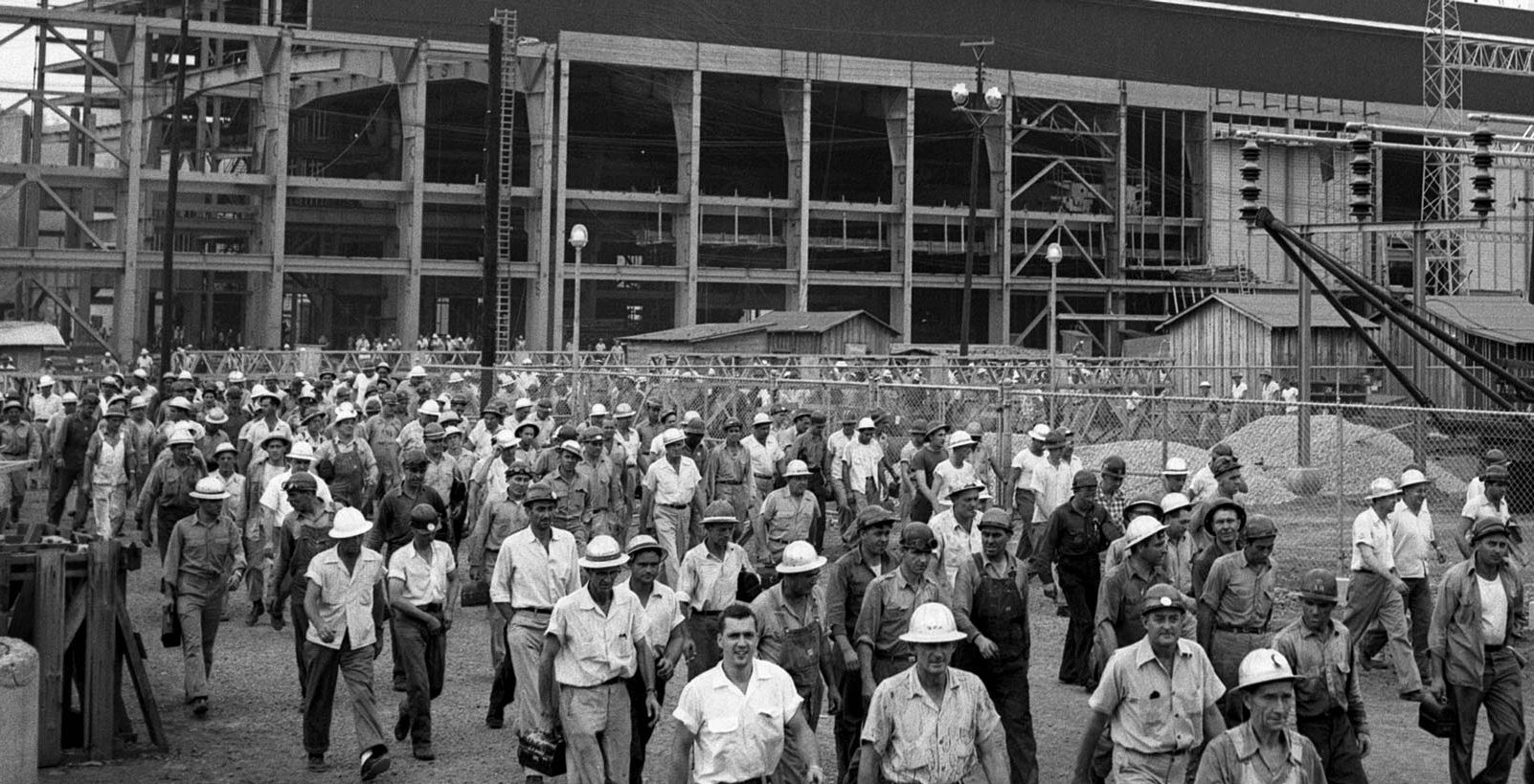
Workers end a shift on a TVA project along the Tennessee River in the 1950s. tva.gov
When the Great Depression hit in the late 1920s, the whole country went into an economic tailspin. But not all places were affected equally. Less-developed rural areas like the Tennessee Valley were especially hammered by the financial collapse. When President Franklin Delano Roosevelt set out to help this area as part of his New Deal, he hit upon a relatively novel idea: create a massive public enterprise that would directly upgrade much of the area’s economy primarily by producing and distributing cheap electricity to the homes and businesses in the area.
In 1933, the Tennessee Valley Authority (TVA) was born out of this idea. The TVA has been a mainstay of the region’s economy ever since.
Operating under the slogan “Electricity for All,” the TVA immediately set about constructing hydroelectric dams across the region and selling the electricity from those dams to people in Tennessee and six adjacent states. Over the years, it has gradually built up enough energy-producing assets — including nuclear plants, coal-fired plants, oil-fired plants, solar sites, and wind farms — to annually produce 160 billion kilowatt hours of electricity that ultimately finds its way into the homes of ten million people.