A Testing of the Waters After Janus
What will the landscape for public-sector workers look like after Janus? The University of Illinois-Chicago is seeing what it can get away with — but campus unions are meeting the attacks with more militancy.
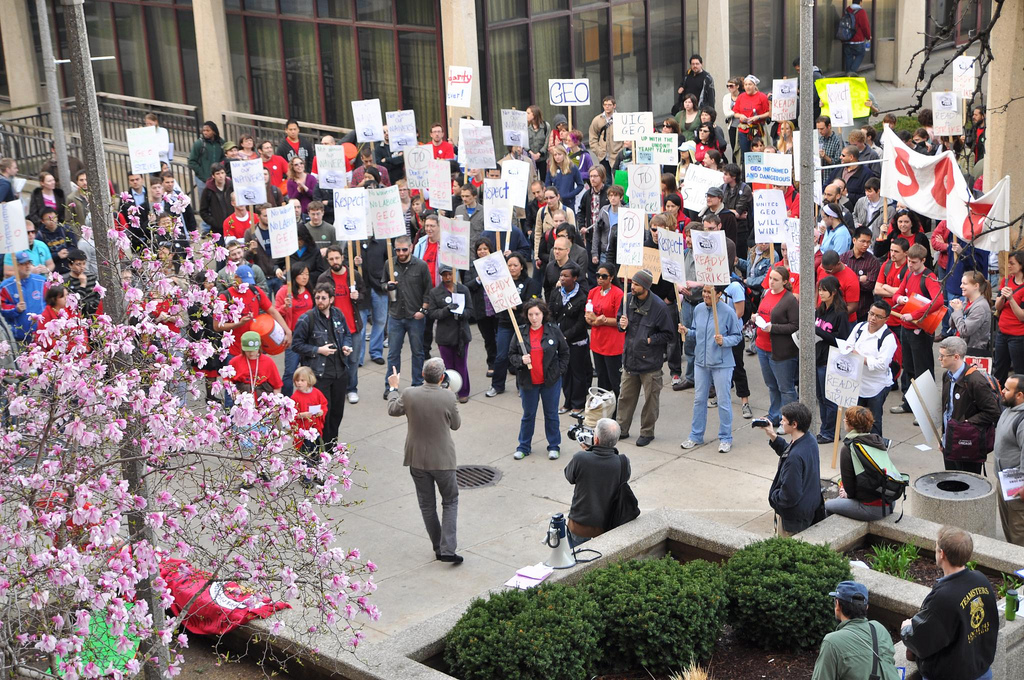
Members of the Graduate Employees Organization protest on the UIC campus in 2010. Ben Seese / Flickr
In the aftermath of this summer’s Janus v. AFSCME Supreme Court decision attacking public-sector unions, the University of Illinois at Chicago is rapidly becoming a bellwether for how those unions might sink or swim in a world without fair share.
UIC prides itself on being one of the most diverse college campuses in the country and one of the most welcoming to working-class students. The city’s only public research university and home to a vast hospital system, UIC employs a cross section of public-sector workers including nurses, teachers, clerical workers, and maintenance workers, nearly all of whom are unionized.
In recent years, university officials have rightly issued public statements critical of government actions that harm members of the campus community, including Trump’s Muslim ban, the Illinois state budget impasse, and the House GOP’s failed attempt to tax graduate student tuition waivers. But since the Supreme Court issued its anti-union decision in the Janus case this June — threatening the collective bargaining rights of thousands of university employees — the administration has been silent. Instead, through their actions, administrators have indicated a willingness to use Janus to engage in union busting.