Labor’s Choice After Janus
The Supreme Court Janus decision is a devastating defeat for labor. Public-sector unions now have two choices: continued decline, or a reversion to the kind of militant collective action of the movement’s early years.
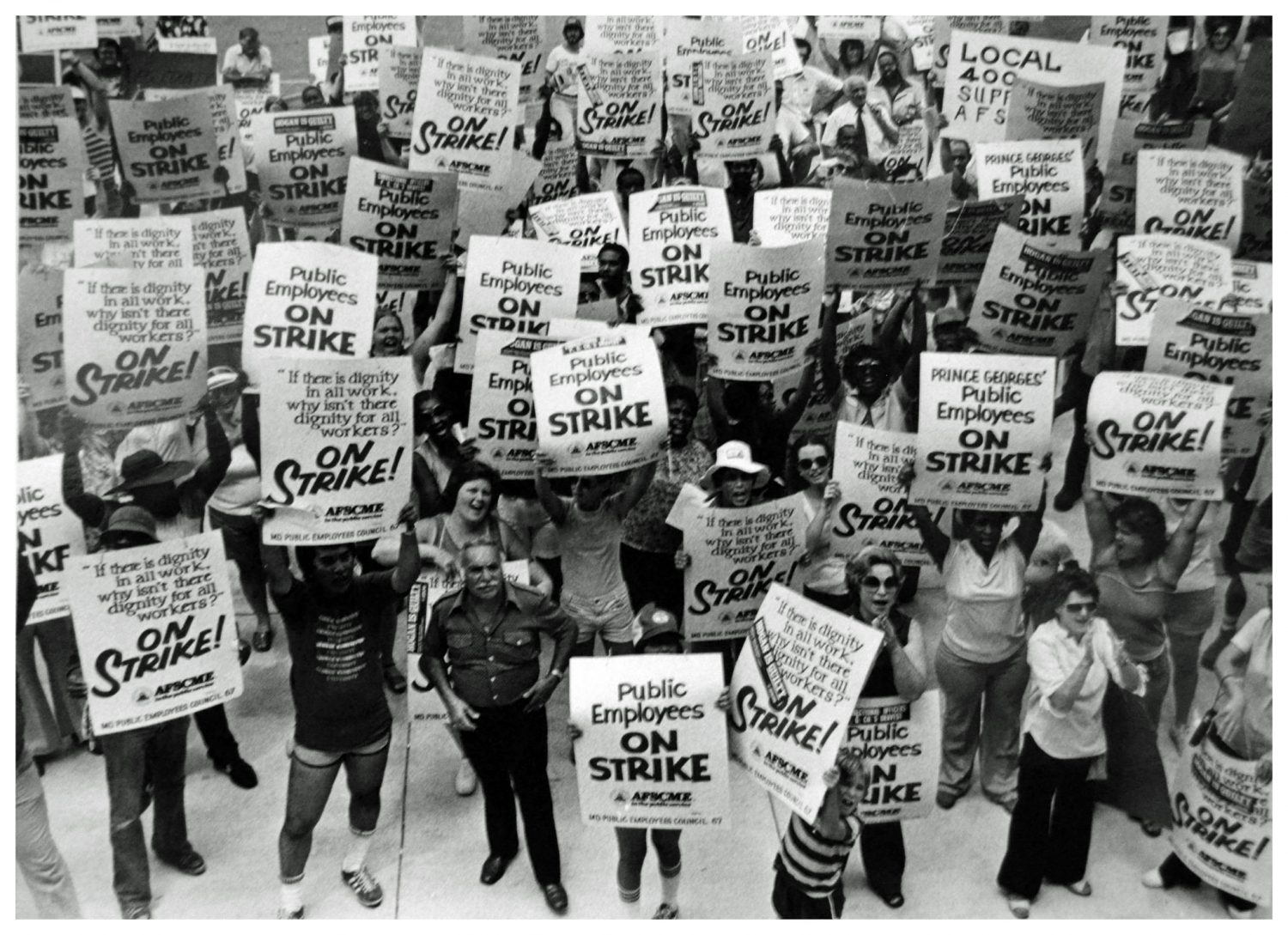
Prince George’s County workers rally at the County Administration Building in Upper Marlboro, Maryland, on August 13, 1980. D.C. Public Library, Washington Star Collection
Labor’s day of reckoning has finally arrived.
In a landmark 5-4 decision in Janus v. American Federation State, County, and Municipal Employees, the Supreme Court has effectively imposed a “right-to-work” regime on public sector unions in all fifty states. There’s no sugarcoating it: this is a major defeat for an already embattled labor movement, and the successful culmination of years of right-wing judicial activism aimed at undermining organized labor’s last remaining stronghold.
The decision punctuates a relentlessly brutal period for organized labor in the US. Six states have passed right-to-work laws since 2012, bringing the open shop to a majority of states including traditional union strongholds like Wisconsin, Michigan, Indiana, and West Virginia. Wisconsin enacted the infamous Act 10, which goes beyond the open shop to radically restrict the scope of collective bargaining and undercut public employees’ wages. Iowa and Missouri passed laws that require public sector unions to hold regular recertification votes, and a handful of states enacted so-called “paycheck protection” laws that require unions to obtain authorization from each member every year before deducting dues or fees from their paychecks.