How UIC Grad Workers Fought the Neoliberal University Model — And Won
University of Illinois-Chicago graduate workers recently went on strike over high student fees, poverty wages, and the corporate higher education model. After nearly three weeks, they won.
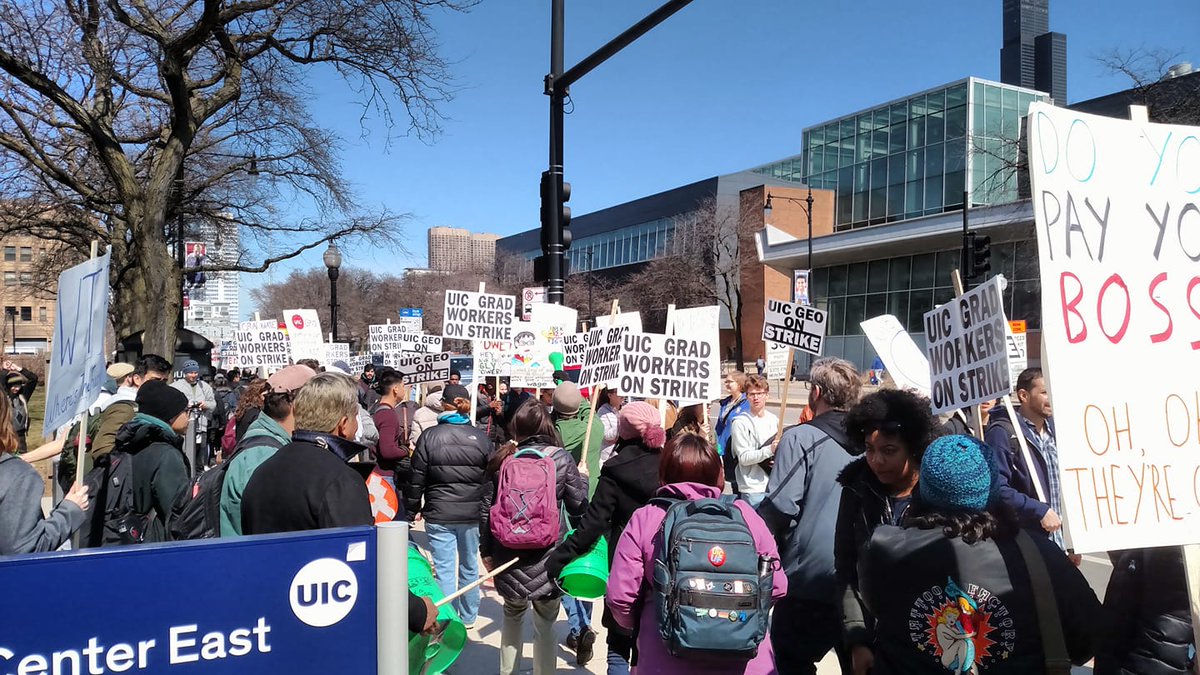
UIC workers on strike, March 21, 2019.UIC GEO / Twitter
Between March 19 and April 5, graduate student workers at the University of Illinois at Chicago (UIC) staged our first-ever strike. The work stoppage shut down the largest university in the country’s third biggest city. We were up against an intransigent, anti-union administration — and we won.
The strike was a rebellion against the neoliberal university model, which prioritizes “revenue generation” over education and research by exploiting students and workers. It was a challenge to the narrative that graduate school is a kind of hazing ritual and that grad workers should simply adjust themselves to poverty and misery.
UIC grad workers — who mostly work as teaching assistants and course instructors — are paid a minimum salary of $18,000 per year while having to pay up to $2,000 back to the university in the form of fees, leaving a paltry $16,000 to live on in Chicago. This despite the fact that we provide one-on-one attention to students, do the bulk of the grading, and frequently serve as the primary instructors for courses of as many as sixty undergrads.