Privilege Versus Democracy in Brazil
Jair Bolsonaro represents the rise of an authoritarian neoliberalism in Brazil and across the world. If he's elected president, Brazilian democracy could collapse.
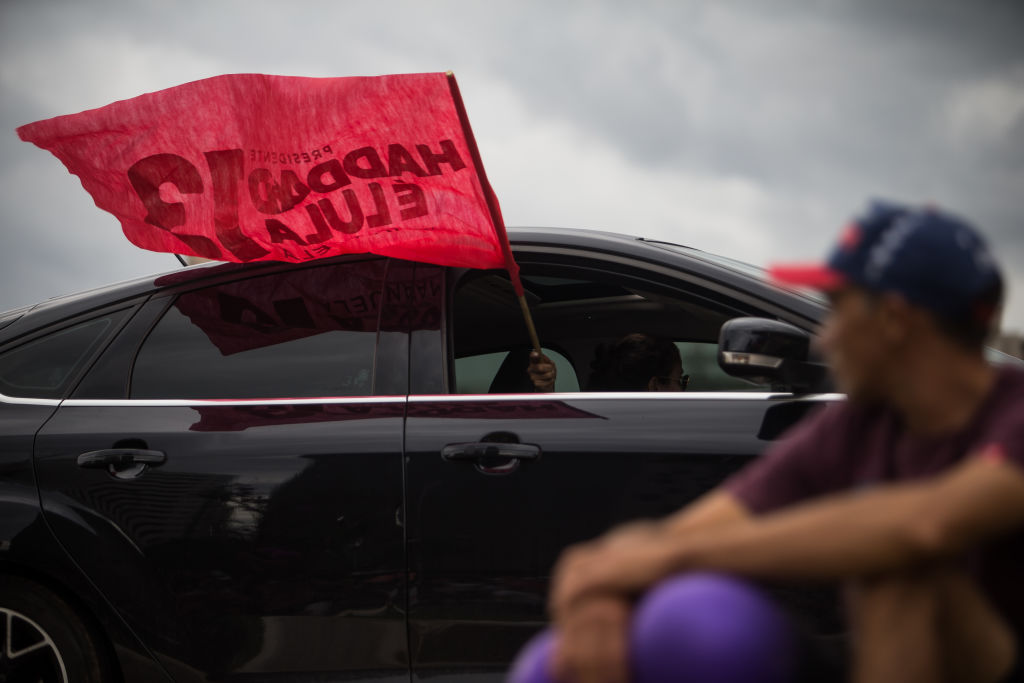
Demonstrators protest in favor of presidential candidate Fernando Haddad of the Workers’ Party on October 20, 2018 in Brasilia, Brazil. Victor Moriyama / Getty Images
Brazil will elect its new president on October 28, 2018. Since the judicial-parliamentary coup that removed elected president Dilma Rousseff of the Workers’ Party (PT), the new administration (led by her former vice president, Michel Temer) has advanced its agenda of neoliberal “reforms.” The economic crisis has continued unabated, and the campaign for the destruction of the PT has intensified, leading to the imprisonment of former president and PT founder Luiz Inácio Lula da Silva.
Finally, the armed forces have increasingly intervened in political life, particularly through the occupation of peripheral areas in Rio de Janeiro. Their close relationship with the judiciary is encapsulated in the appointment of General Fernando Azevedo e Silva as “adviser” to the president of the Supreme Court, and in statements like the thinly disguised demand for Lula’s incarceration issued by army commander General Eduardo Villas Boas.
The state’s shift towards an exceptionally draconian variety of neoliberalism was challenged by attempts to rebuild the Left through Lula’s campaign for the presidency. These attempts were especially visible in his convoy around the country in early 2018, which led to his steep rise in the opinion polls.