Bernie’s New Internationalist Vision
Right-wing populism is advancing across the world. Bernie Sanders wants to fight back.
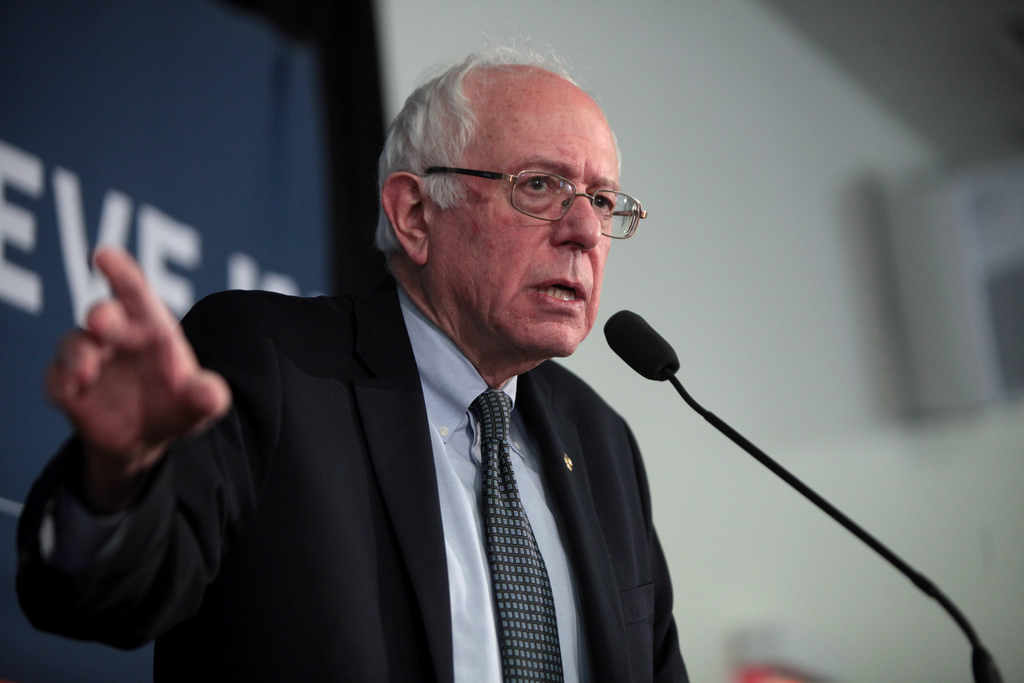
Gage Skidmore / Flickr
Bernie Sanders has been called “bad on foreign policy” by just about everyone under the sun. Coming from those to his right, it typically means insufficiently deferential to the hawks of the foreign policy establishment. Sanders vocally opposed and voted against the Iraq War, is more critical of Israel than any other major American politician, has proposed drastic cuts in military spending, sought to terminate the US nuclear weapons program, opposes US support for the Saudi-led offensive in Yemen, and has expressed strong opposition to past CIA-backed coups in Latin America and Iran, among other unorthodox foreign policy positions.
Coming from the Left, criticisms have often been founded in legitimate concern that Sanders’s foreign policy hasn’t departed from the bipartisan consensus as much as his domestic economic policy has. For example, while all of the above is true, he doesn’t support the movement for Boycott, Divestment, and Sanctions (BDS) against Israel, and he has cast his vote for US military intervention several times during his decades-long tenure in the Senate. He has spoken on occasion about the need to preserve American military might, even while he inveighs against the waste and the abuses of the US military at other times.
As a young man Sanders sought to be a conscientious objector to the Vietnam War, visited post-revolutionary Cuba, and arranged diplomatic meetings with Sandinistas. But his tenure in the Senate coincided with a yawning absence of a strong domestic antiwar movement, and he often found himself toeing the liberal line on foreign policy, saving his dissent for domestic policy fights and big-ticket foreign policy episodes like the Iraq War.