Their War Criminal Problem — And Ours
The media finds it worrisome when ultranationalist leaders are fêted overseas. Then they do exactly the same thing at home.
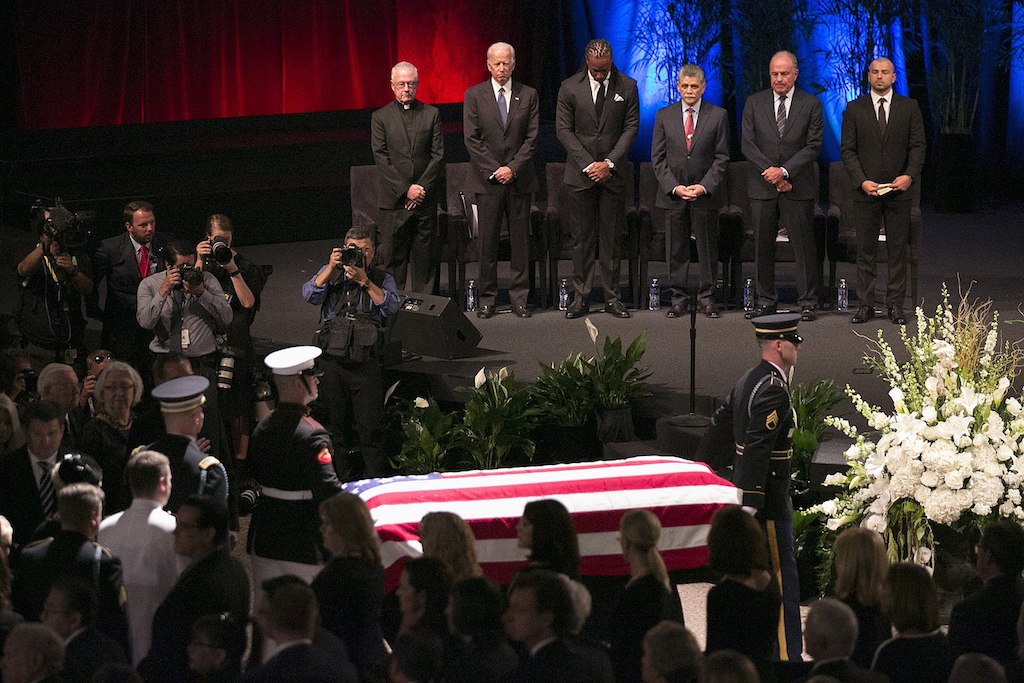
A memorial service for John McCain in Phoenix, Arizona. (Adrian Borunda / Wikimedia Commons)
Last week, Serbian president Aleksandar Vučić gave a speech in Kosovo where, among other things, he called the late Serbian strongman and war criminal Slobodan Milošević, who died in 2006, a “great Serbian leader,” adding that “he certainly had the best of intentions, although our results were much worse.” It was a hell of a way to describe a corrupt, nationalist autocrat who helped engineer the break-up of his own country while abetting campaigns of mass rape and genocide.
The speech naturally raised eyebrows in the region, not least because Vučić — who cracked down on opposition media as Milošević’s information minister — is meant to be a “reformed” ultranationalist. It wasn’t just regional voices, however: both the US-funded Radio Free Europe/Radio Liberty and the Washington Post published articles noting the outrage from Serbia’s neighbors over the comments. Both were pieces of straight reporting, but the obvious takeaway from each — and indeed, what other takeaway can there be? — is that one should be disturbed by the praise being given to an authoritarian war criminal.
This isn’t a new theme in Western establishment media, which has long been sounding the alarm over the rehabilitation of Milošević within Serbia. In the mid-2000s, Serbian prosecutors and courts took steps to shield Milošević and his family from justice for a variety of criminal acts, while sympathetic politicians rounded on the family’s critics. Newspapers warned that the election of a nationalist government to power, coupled with Milošević’s own clever manipulation of public opinion, had contributed to a revival of public standing for both himself and the values he championed.