The John McCain of India
Atal Bihari Vajpayee, India’s “statesmanlike” far-right leader, died this month. The praise showered on him by Indian liberals shows how far to the right the country has moved.
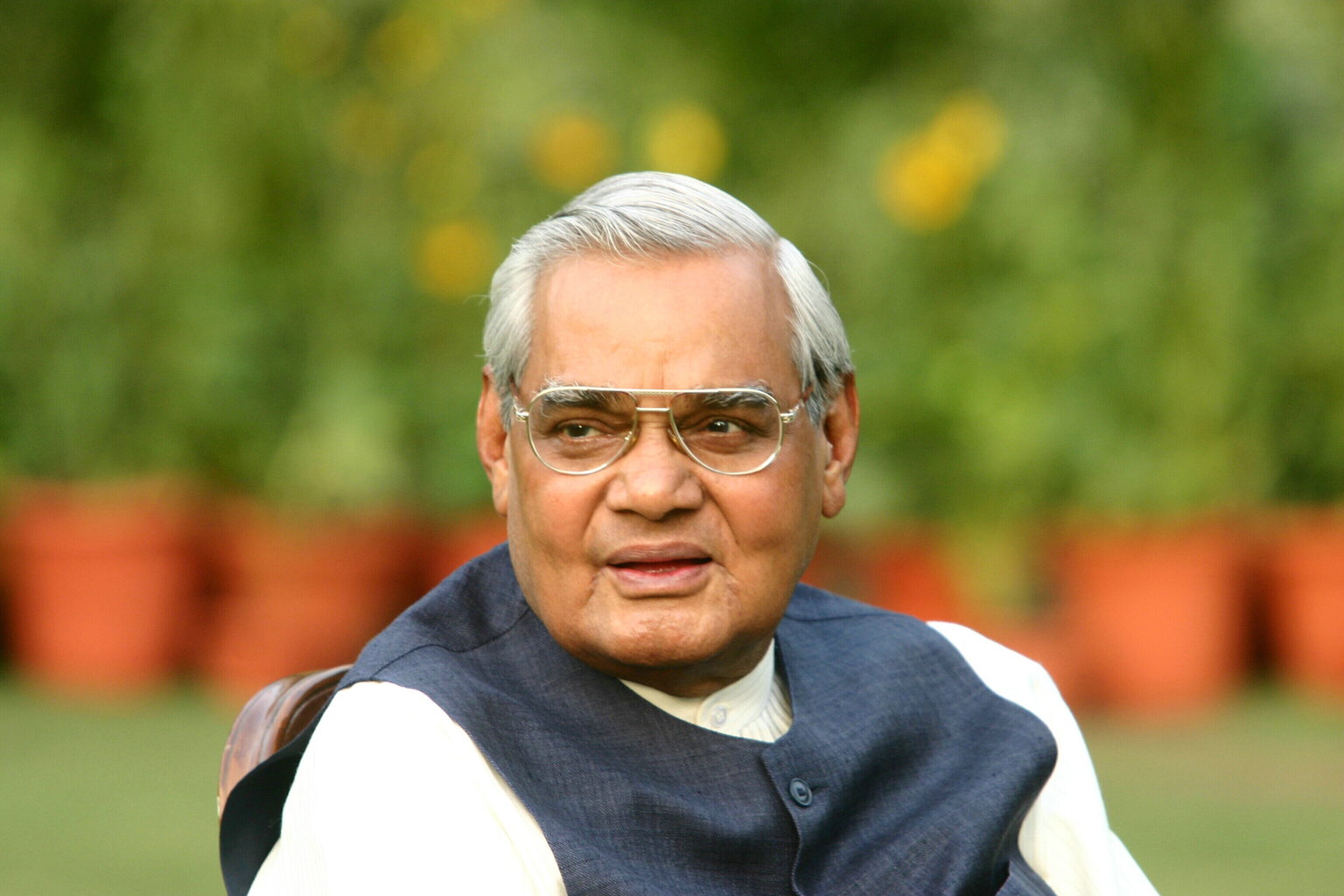
Atal Bihari Vajpayee, former prime minister of India, March 25, 2004.Hemant Chawla / The India Today Group / Getty
Atal Bihari Vajpayee, a former activist with the far-right Rashtriya Swayamsevak Sangh (RSS), the leader of the Bharatiya Janata Party (BJP), and prime minister from 1998–2004, passed away on August 16 of this year. But the extraordinary deluge of praise showered by journalists and TV news anchors, by leaders and spokespersons of all the opposition parties including the Congress, by liberal scholars and commentators, is a clear indication of how widely and deeply the ideological-political hegemony of Hindutva has penetrated society and polity.
It is from the ranks of those outside the BJP, RSS, and other affiliates of the wider Sangh “Parivar,” or “family,” that he has been called the “gentle colossus,” “great patriot and statesman,” “liberal pragmatist,” “dove among hawks,” and even “the last of the Nehruvians.” The parties of the parliamentary left, like the Communist Party of India (CPI) and the Communist Party of India-Marxist (CPM), have thankfully been much less effusive. But unfortunately, they have still felt the need to commend his supposedly democratic temperament and the civility of his interactions with opposition parties despite political differences and conflicts.
How is it that the political personality of one who never wavered in his fealty to Hindutva or to the RSS and its political wings — first the Bharatiya Jana Sangh (BJS) and then the BJP — could be so misconstrued? If this says something about how successful Hindutva — the most aggressive and exclusivist version of Hindu nationalism — has become in shaping the dominant form of today’s political “common sense,” it also says something about how other political forces have themselves contributed to the erosion and degeneration of Indian democracy and to the substantial normalization of a politics of evil, for that is what Hindutva is. Its goal has always been the establishment of a Hindu Rashtra, or nation, for which a Hindu state in all but name is required. This would mean going well beyond the existing deficiencies of the Indian polity, to create a much more limited, controlled, and “authoritarian democracy” in which Muslims in particular (comprising 14 percent of the total population) would be permanently inferiorized as second-class citizens and living in constant fear of severe retribution should they seek to oppose such a state of affairs.