Learning from the New Communist Movement
Socialists today don't have to reinvent the wheel — we can learn from the successes and failures of past American radicals, including the New Communist Movement.
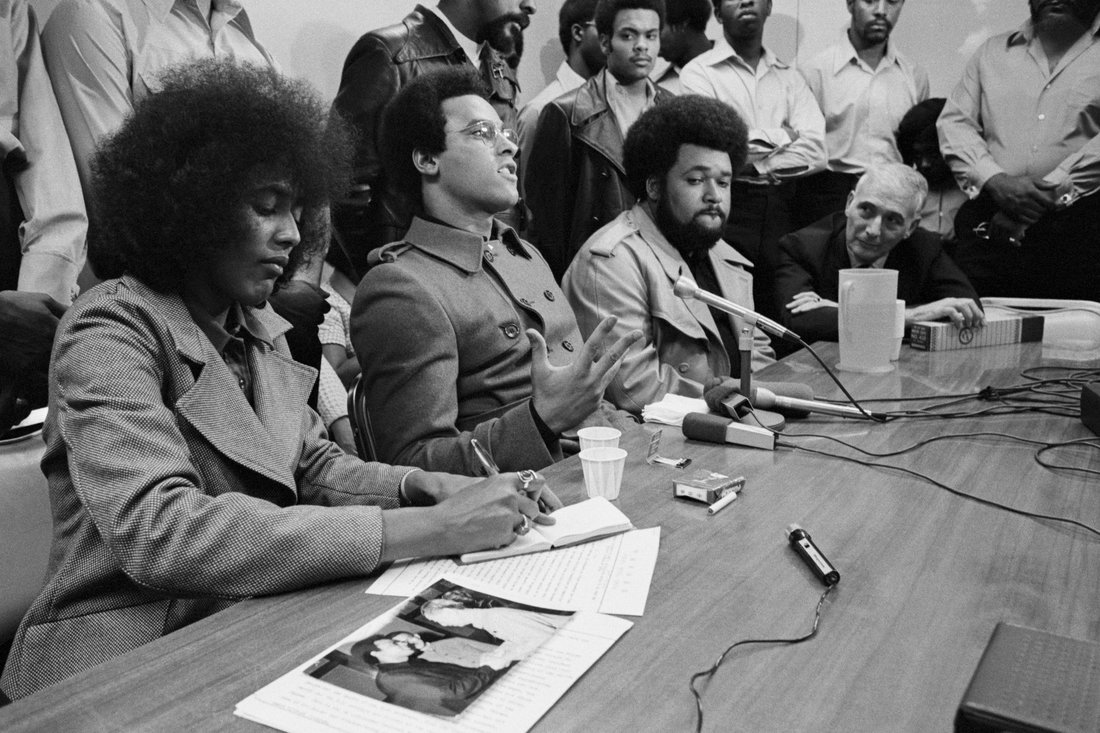
Black Panther Party leader Huey P. Newton holds a press conference on his return from China where he met with Chinese leader Chou En Lai.Getty
With the popularity of politicians like Bernie Sanders and Alexandria Ocasio-Cortez and the explosion in membership in the Democratic Socialists of America (DSA), socialism is suddenly central to the national political conversation. And it’s happening in the United States. Despite being a country long argued to be uniquely allergic to all talk of class conflict and any alternative to capitalism, here we are, watching many Americans question whether we should remake our political and economic systems from top to bottom.
But this isn’t the first time mass numbers of people in the United States have considered socialism. It also happened half a century ago, when the New Left raised questions about capitalism, imperialism, racism, sexism, and much more. At the end of the 1960s, those questions were taken up by the New Communist Movement (NCM), a collection of groups in the Marxist-Leninist tradition. While the movement was made up of organizations that had different answers to burning political questions, on the whole, these groups were inspired by the left-nationalist projects of the day, including domestic movements like the Black Panthers and Puerto Rican nationalist groups, and international communist movements in Cuba, Vietnam, and especially China.
Max Elbaum was deeply involved in that movement. After joining Students for a Democratic Society (SDS) as a college student in Madison, Wisconsin, Elbaum co-founded the NCM group Line of March. He ended up devoting his life to various movements against war and racism and served as the editor of the leftist magazine CrossRoads throughout the 1990s.