The Philanthropy Racket
Philanthropy is how the global elite cast themselves as do-gooders — the people destroying the world are posing as its saviors.
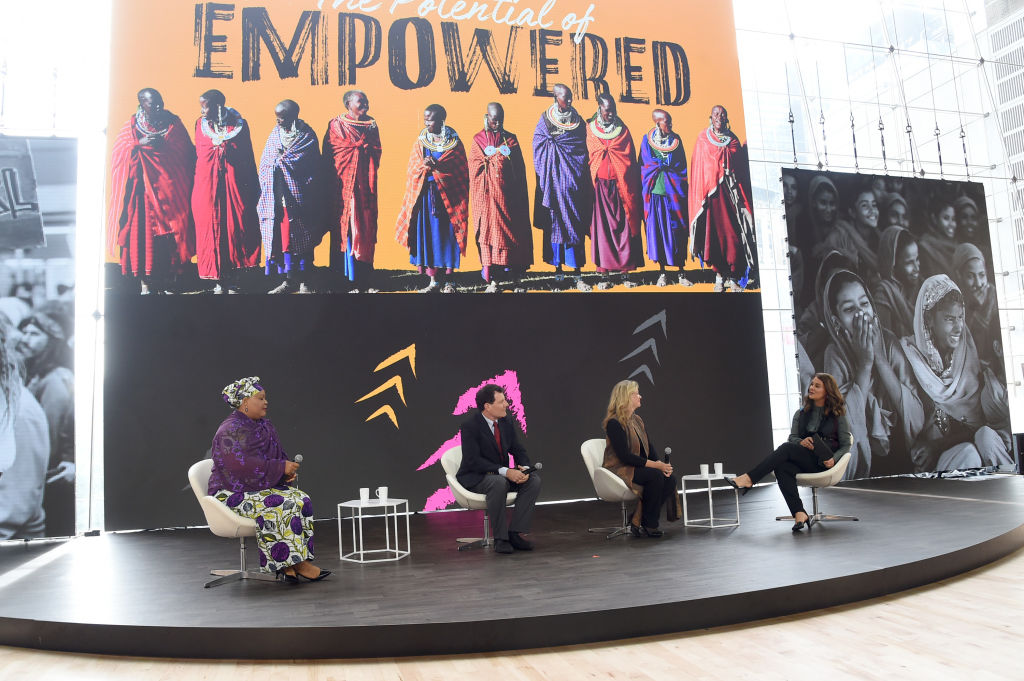
Leymah Gbowee, Nick Kristof, Laurel Weldon, and Melinda Gates speaking at Goalkeepers 2017 in New York City. Goalkeepers is organized by the Bill & Melinda Gates Foundation. Jamie McCarthy / Getty Images.
As Anand Giridharadas argues in his indispensable new book, Winners Take All, “There is no denying that today’s elite may be among the more socially concerned elites in history. But it is also, by the cold logic of numbers, among the most predatory.”
As wages stagnate and decline, and income and housing supports are viciously winnowed away, a new brand of philanthropic do-goodism aims to transform social relief into entrepreneurial opportunity. In big-name corporate consultancies like McKinsey, at global meeting grounds like Davos, Aspen and Doha, within the warm self-admiring glow of the Clinton Global Initiatives (CGI), the very class profiting from global inequality convenes in search of ways to ameliorate its symptoms — profitably, of course, via a stable of “disruptive” market-driven interventions in healthcare, transportation, housing and other spheres that are sold to investors as ingenious ways of hacking society.
The perverse dogma behind such initiatives is the mantra “win-win” — the notion that social reform need never entail any cost to corporate bottom lines. As one of its chief theorists, former TechCrunch reporter Greg Ferenstein explains, if you assume the public sector is fundamentally at odds with the market: