The Crisis That Created Putin
Twenty years ago, a crisis of Russian capitalism doomed Moscow’s pro-Western regime and gave birth to the Putin era.
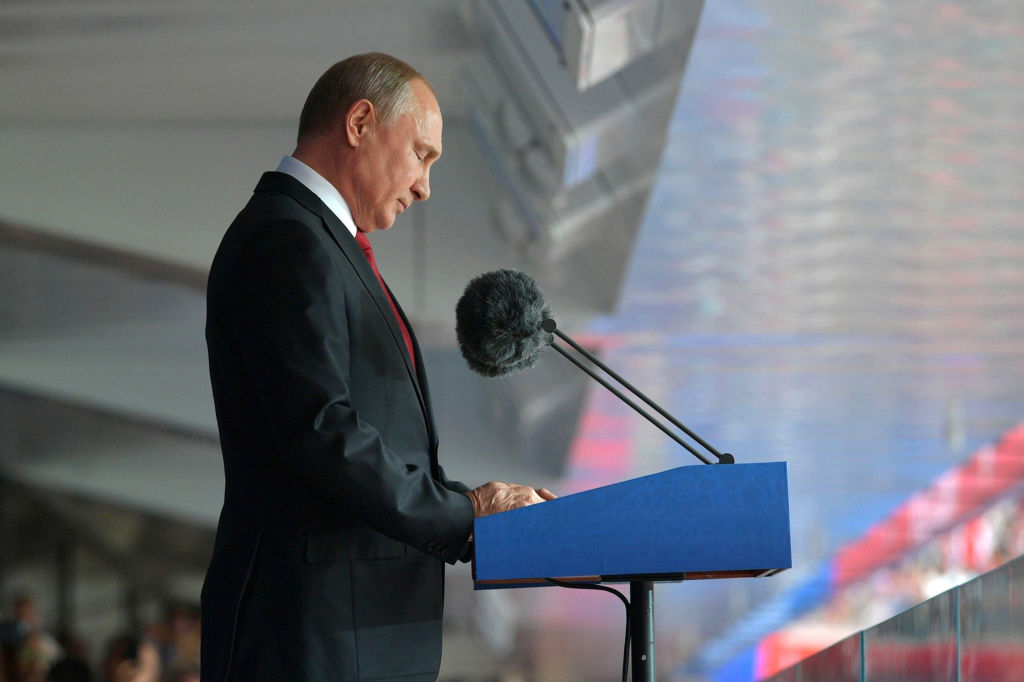
Vladimir Putin on June 14, 2018 in Moscow, Russia. (Pool / Getty Images)
Though it passed largely unnoticed, this August marked the twentieth anniversary of an event that decisively reshaped modern Russia. There are obvious reasons why Russians wouldn’t especially want to commemorate the rouble crash of 1998. But that event and its fallout had a much more significant impact on the country’s politics, its economy, and its foreign policy than is generally appreciated today.
It’s customary to see the presidential handover from Boris Yeltsin to Vladimir Putin on New Year’s Eve, 1999, as the most significant watershed in Russia’s recent history; its status as an epochal shift is reinforced by its coinciding with the turn of the century. But in many important respects, the groundwork for Putin’s rise to power was laid more than a year earlier, in the summer of 1998. Looking back to those events can help us understand what made his long dominance possible in the first place.
Economic Chaos
The rouble’s 1998 collapse was itself a delayed consequence of the Asian financial crisis that had begun the year before. For months, the Russian government struggled to contain the ripple effects from the turmoil to its east. The country was already mired in a deep economic depression that had lasted several years. The aftershocks of the Soviet collapse had been amplified in turn by “shock therapy,” and by the second half of the 1990s poverty and unemployment were widespread, life expectancy had plummeted, and symptoms of social collapse were rife. In May 1998, coal miners blocked the Trans-Siberian railway in several places in protest over unpaid wages, raising the prospect of wider unrest.