Every Child Needs the Good Enough State
The richness of childhood needs to be embraced as a social good.
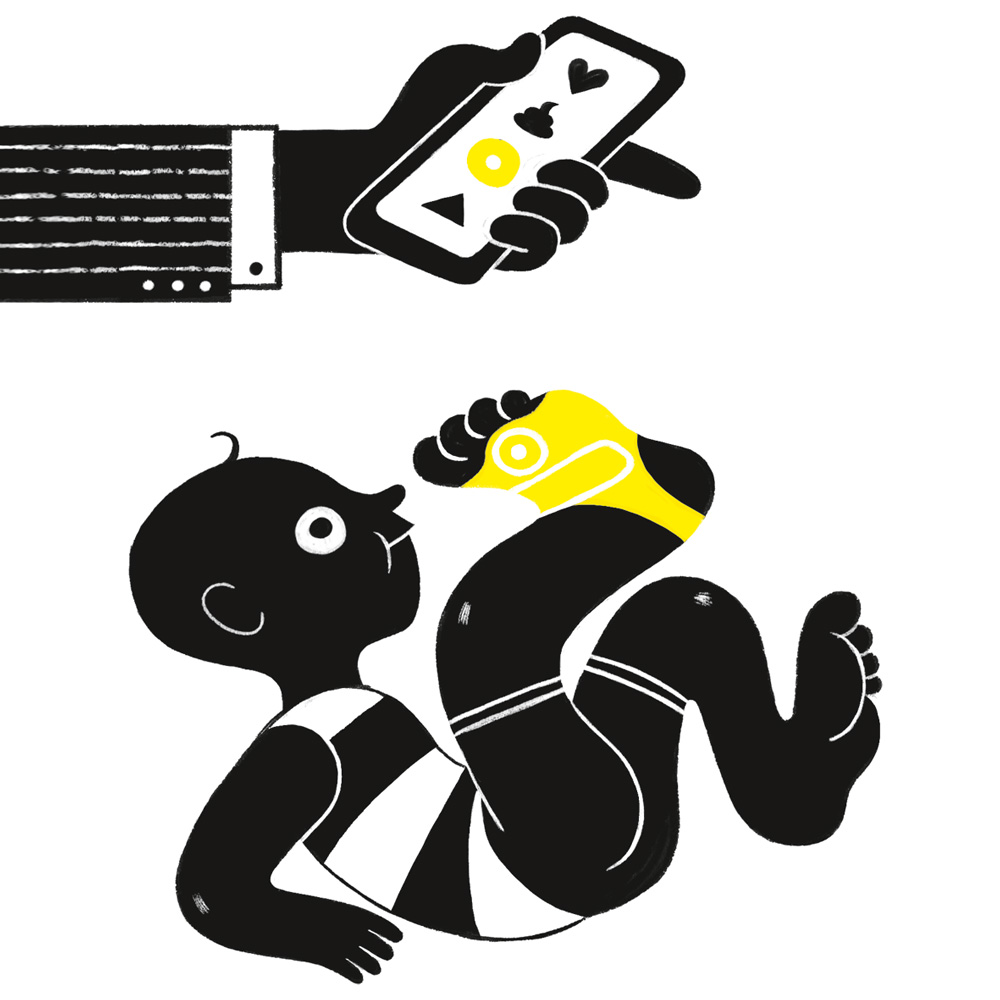
Illustration by Esther Aarts
It took the devastation of the Civil War to establish government provision for veterans and their kin. Panic about childhood and its inviolability along with a collective sense of responsibility for soldiers, widows, and their children intensified at the end of World War I. Mass immigration, industrialization, and financial crises also cast new light on collective responsibility for the suffering and deprivation of society’s most vulnerable. Agitators such as Jane Addams and Eugene V. Debs led movements demanding social services and publicly funded welfare for working people.
Beyond just capitalists, workers faced a new class of antagonists at the new century’s dawn: bosses, engineers, experts, and advertisers. In their 1976 essay, “The Professional Managerial Class,” Barbara and John Ehrenreich defined the salient qualities of this intermediary class, between the proletariat and the capitalist, who advocated for wealth redistribution while decrying working-class consumption habits. Their role in the class war was not obvious in the Progressive Era, but the pmc began to serve capital by pioneering new forms of cultural discipline and reinforcing the social order. With complete faith in their position as arbiters of morality, the pmc established cultural norms that would shape American child-rearing for generations.
Benjamin Spock was one of the most influential figures of this new class. Popularizing psychoanalytic ideas about pleasure and identification, Spock played an important role in the formation of new pmc identities. In his best seller, Baby and Child Care, first published in 1945 — just as the first boomers began to toddle — Spock advised new parents that they should trust themselves with their babies. While the naturalness and intuition that Spock praised seemed like an antidote to authoritarian baby care, his readers were squarely positioned as mid-century consumers seeking assurance and “empowerment” through the consumption of new ideas about child development.