Making Sense of the Malaysian Elections
Malaysians have ousted their corrupt prime minister and opened the door for fundamental reform.
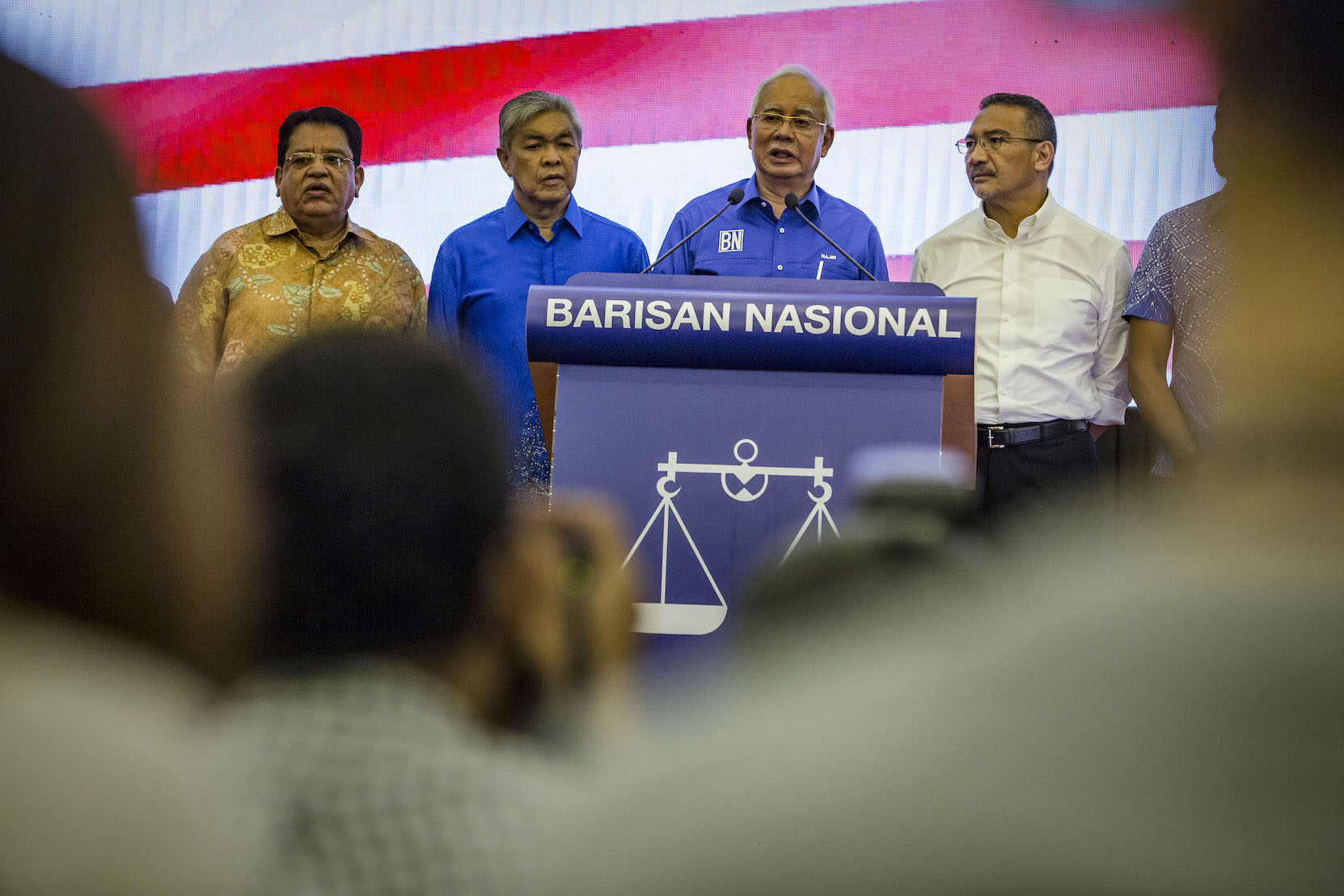
Najib Razak, the outgoing prime minister of Malaysia, speaks during a press conference in Kuala Lumpur following the country’s May 10 general election. Ulet Ifansasti / Getty
On May 9, Malaysians threw the bums out, voting decisively against the Barisan Nasional (National Front, BN), the coalition of broadly right-wing and center parties that had governed Malaysia since independence in 1957. The election poses the question: has Malaysia bucked a global anti-democratic trend?
The conventional wisdom is that a feisty, beleaguered opposition coalition made up of a somewhat motley mix of leftist catch-all, progressive Islamist, and communal parties bested the behemoth BN by force of ideals, pluck, and the charisma of a former “dictator,” as the new prime minister now delights in branding himself. The BN’s decrepitude, born of too many years of untrammeled authority and political inbreeding in a cronyistic, dynastic order, cleared the way for new leaders. All the while, rising costs of living, increasingly stark economic inequality, and spreading awareness that the state- and party-controlled mainstream media were not telling the whole story had left the mass of voters hungry for change.
The Malaysian narrative is one of voters reflecting critically on a well-lubricated patronage machine and rejecting it, at least in part, out of aspirations for democracy, justice, and good governance. But like any good story, this one has a more complex plot line than that, peppered with stratagems, reversals, and ironic turns. What too-pat narratives obscure is the wider context and what we might expect — and voters might seek — to change or maintain.