Indonesia’s Red Slaughter
From 1965 to 1966, the Indonesian military and its allies massacred hundreds of thousands of Communists — often with the active aid of Western, democratic governments.
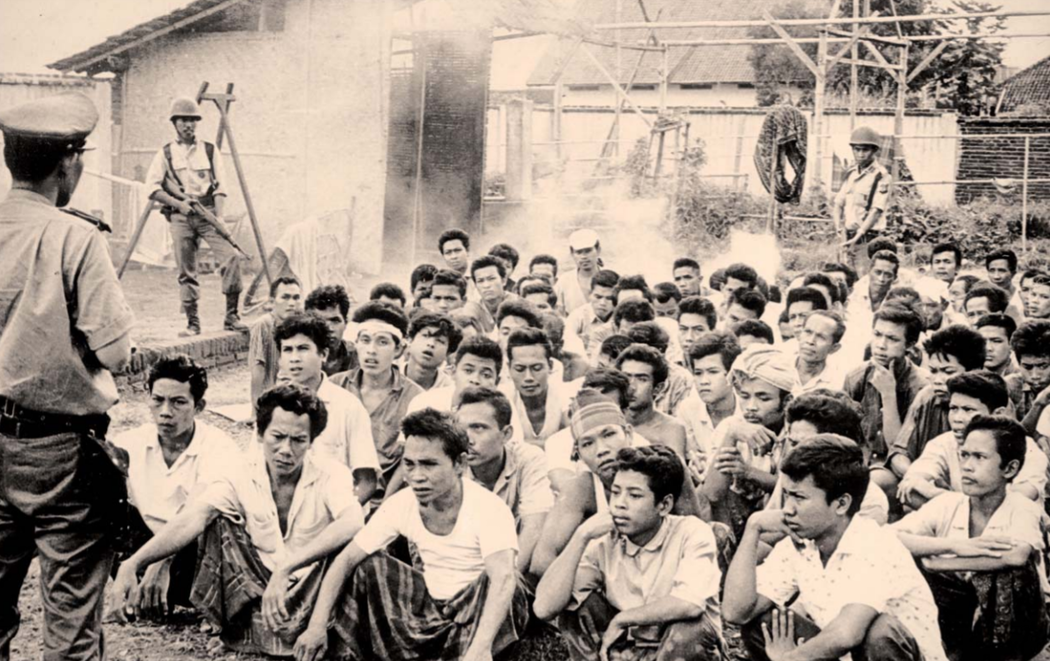
PKI members and sympathizers rounded up in Bali, date unknown.Tempo / The Act of Killing
Before its destruction in 1965, the Indonesian Communist Party (PKI, in its Indonesian abbreviation) was the world’s third-largest communist party. But that year, hundreds of thousands of its members and supporters were murdered in one of the great crimes of the twentieth century.
In one of the most notorious cases, the Brantas River apparently became clogged with dead bodies; “Usually the corpses were no longer recognizable as human. Headless. Stomachs torn open. To make sure they didn’t sink, the carcasses were deliberately tied to, or impaled on, bamboo stakes.” Bodies “were stacked together on rafts over which the PKI banner proudly flew.”
The Killing Season: A History of the Indonesian Massacres, 1965–66 by Geoffrey B. Robinson is a crucial book about the destruction of the Indonesian left and the formation of a new, authoritarian regime. This was a turning point not only for Indonesia, but for the whole Southeast Asian region. The book gives as complete a picture of this period as is possible with the current state of research, adding to the possibility of a deeper reckoning with Indonesia’s history of anticommunist slaughter than the country has engaged in thus far.