Choose Wisely
Employers love high-deductible insurance plans. They’re designed to deter patients from seeking care — and they work.
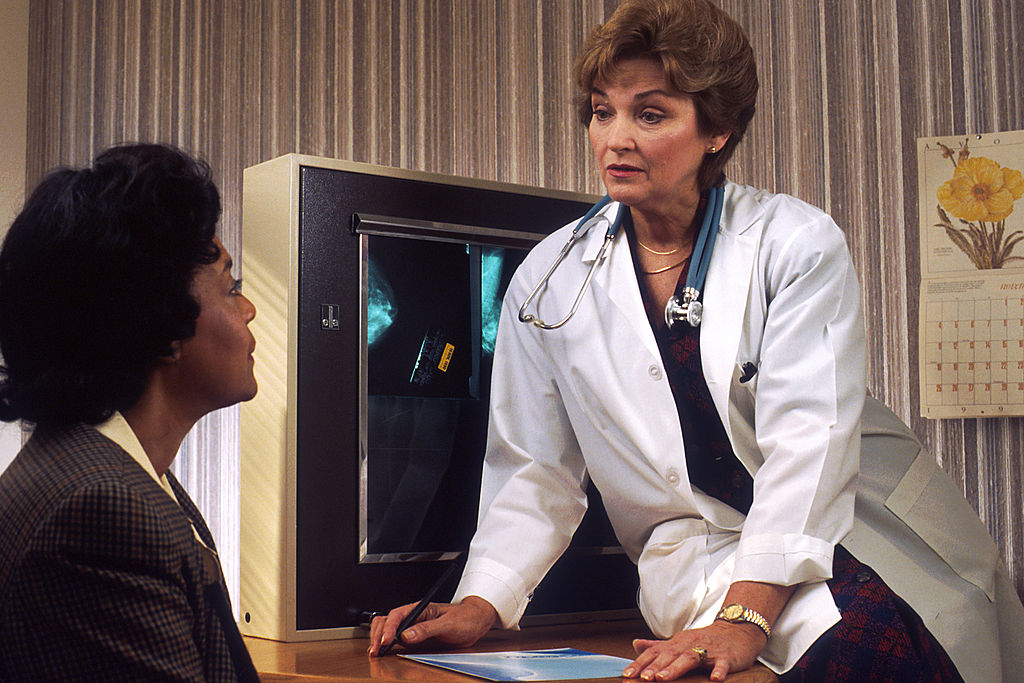
A doctor consults with a patient, November 1990.Bill Branson / National Cancer Institute
American health care spending is about twice as high as the average for comparable nations. Pretty much everyone besides those who directly profit from those expenditures realizes that this is an outrageous problem — especially because our care quality is by many measures inferior. No matter how you spin it, we’re not getting what we’re paying for.
But not everyone agrees on what’s driving the problem. Some say the culprit is rising prices — including administrative, pharmaceutical, and equipment and supply prices — set by unchecked private corporations. That seems reasonable given that our public spending is on par with similar countries; it’s our private spending that’s through the roof. But other experts gravitate toward a different explanation: American health care spending is so high, they claim, because of frivolous spending on the part of careless patients. In an echo of the austerity logic that pervades neoliberal politics, health economists and policy experts say that to bring costs down the American people must be conditioned to consume more responsibly.
Experts who buy this behavioral explanation for high health care costs tend to advocate for high-deductible insurance plans (a deductible is the amount the patient has to pay out-of-pocket before insurance kicks in). They argue that raising deductibles, and thus transferring a higher portion of the financial burden of care to patients, will give consumers more “skin in the game,” presumably so they’ll think twice before ordering unnecessary MRIs and blood work willy-nilly.