The Second Emancipation
Until his assassination in 1968, Martin Luther King Jr led an unheralded struggle for economic justice.
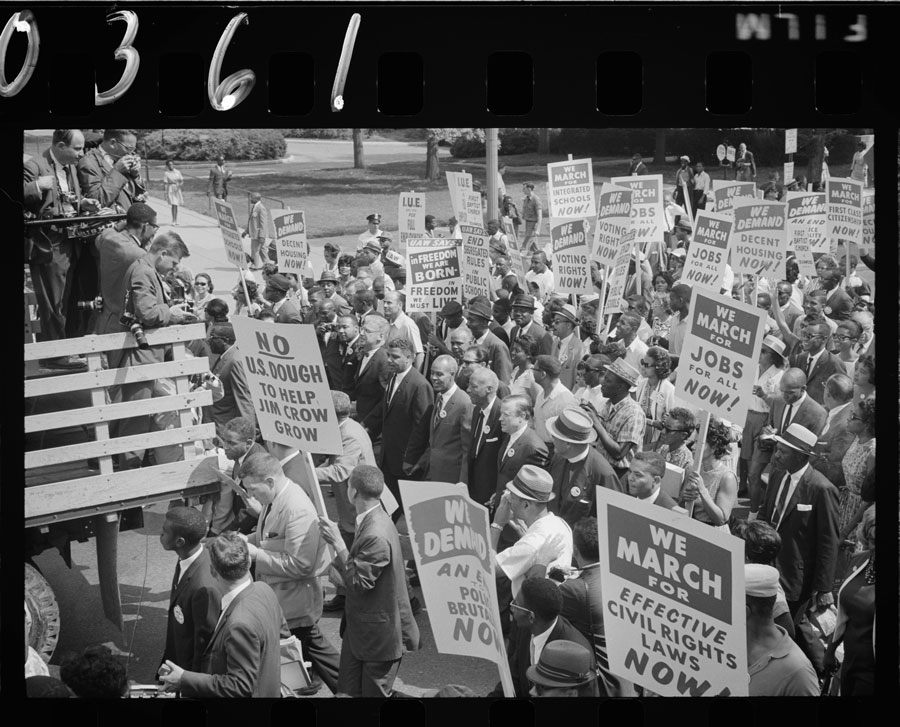
March on Washington, DC, 1963. Warren K. Leffler / Library of Congress
Jonah Birch
You have a new book To the Promised Land about Martin Luther King Jr and economic equality. Can you talk about that? How central was economic justice to his vision of freedom and equality?
Michael K. Honey
I want to reacquaint people with King. We tend to misremember him as primarily a civil rights activist when his agenda for change went beyond civil and voting rights to changing the structures of racism, poverty, and militarism that still oppress us today. From an early age, King was a radical egalitarian who looked at the whole system. So the way that I communicate this is to take King’s own framework, opening the book with his speech to striking sanitation workers in Memphis on March 18, 1968, when he went to the first big strike meeting that he attended in Memphis. In that speech, he says that the freedom movement has always been about economic justice in the largest sense. King says that getting civil rights and voting rights from 1955–65 was just the first phase of the movement. It restored rights that we had won during Reconstruction that should have been the rights of every American to begin with.
People forget that what we call King’s “I Have a Dream” speech at the August 28, 1963 March on Washington was timed to remember 100 years since the emancipation of the slaves in 1863. That first emancipation included racial equality in the law and voting rights, but got overturned by the Jim Crow laws, voter suppression, and especially by economic inequality that put black workers at the bottom of every possible workplace or no workplace at all. And so the slogan in 1963 was for jobs and freedom.