“All Humans Are Born Equal”
The early German socialists fought for the persecuted at home and abroad — convinced that the liberation of workers in Germany was linked to the liberation of oppressed peoples around the globe.
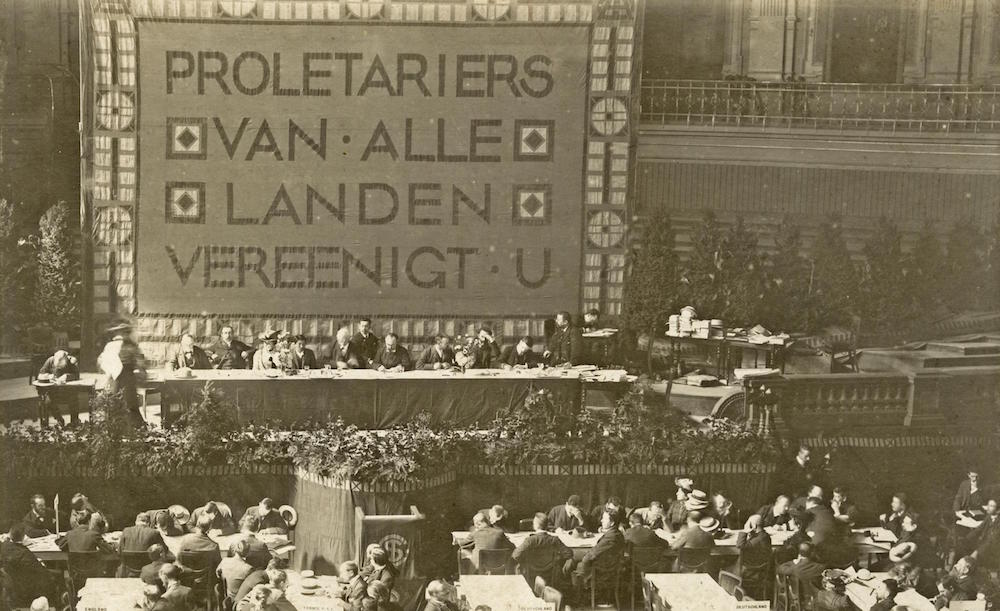
The stage of the 1904 Second International Conference in Amsterdam.
In 1903, on the verge of what most historians would later identify as the twentieth century’s first genocide, German Social Democratic Party (SPD) leader August Bebel rose before parliament to condemn the “war of suppression” his country’s forces were waging against the Herero and Nama peoples in southwest Africa. Bebel was one of just two Reichstag members to dissent from the slaughter (the other was also an SPD parliamentarian).
During an earlier wave of executions of African natives, the Social Democratic newspaper Vorwärts vehemently criticized the German colonial commissioner, describing him as “an enraged Aryan who wishes to destroy all Jews, but, for a lack of Jews over there in Africa, shoots Negros dead like sparrows and hangs negro girls for his own pleasure after they have satisfied his desire.”
Such acts of opposition were not exceptional for German socialists in the hostile atmosphere of the Kaiser’s Germany. The Social Democrats were everywhere the first, and most often the only, to take the side of the persecuted and oppressed. Not content to struggle for the rights of workers domestically, they spoke out against colonialism, discrimination, and national suppression abroad.