We Didn’t Start the Fire
Class conflict isn’t something we choose to engage in. It’s just how capitalism works.
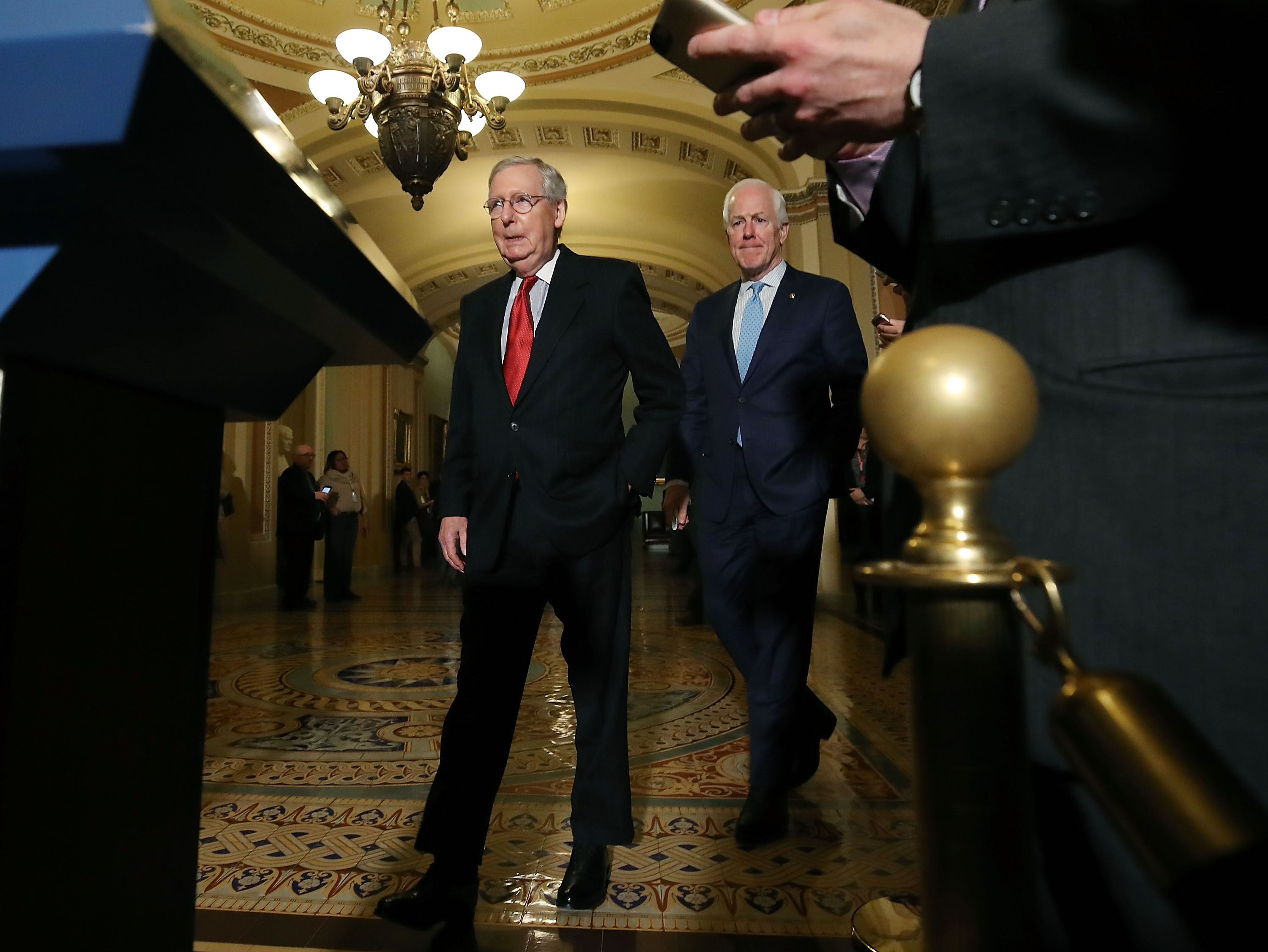
Senate Majority Leader Mitch McConnell (R-KY) and Sen. John Cornyn (R-TX) walk up to speak to reporters about the proposed Senate Republican tax bill, after attending the Senate GOP policy luncheon, at US Capitol on November 14, 2017 in Washington, DC. (Mark Wilson / Getty Images)
Bernie Sanders’s speech in Dayton, Ohio last week was pivotal. “This is class warfare,” he said of the Senate tax bill’s passage, “and we’re going to stand up and fight.” With this simple sentence, broadcast around the country, Bernie became the first national politician to use the term “class war” properly in decades.
I say properly because, while the term has mostly been expunged from our political discourse, it does occasionally make an appearance. Mainstream Democrats won’t utter it — the closest they come is Barack Obama calling himself a “warrior for the middle class.” But Republicans do talk about class war. They either use the term derisively, accusing Democrats of “class war demagoguery” when they attempt to halt tax cuts for the wealthy, or sadistically, such as when Paul Ryan said “we should not shy away from class warfare,” by which he meant politicking on behalf of oligarchs.
There’s something depressing about being accused of “class war demagoguery” while failing to muster any such thing. If you’re going to do the time, you might as well do the crime. Bernie has at long last come right out and said it: There is a class war on right now, and the only question is whether the working class will ride into battle or passively observe the plunder.