The Antidote to Macri
As Argentina's right consolidates power, left-wing victories at the local level are crucial to reclaiming political space.
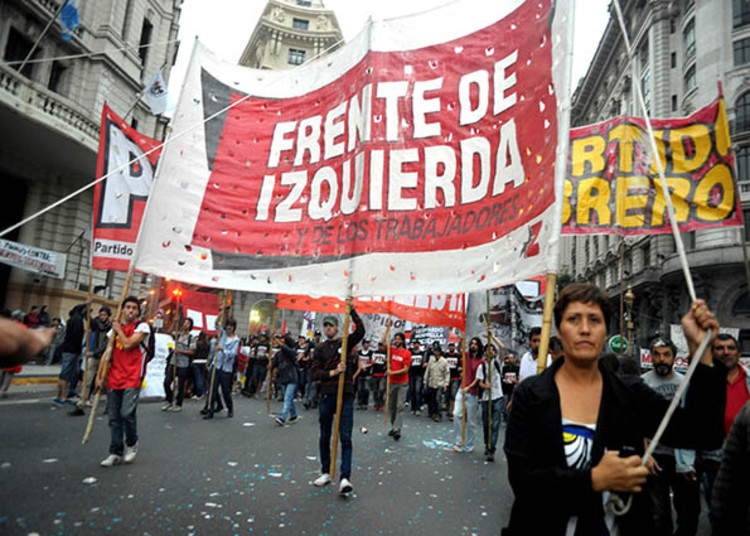
An FIT demonstration. Partido Obrero
Argentinian politics have long been a case study in contradictions. Its labor movement has been among the strongest in Latin America since its birth at the turn of the twentieth century. On the back of mighty labor, Juan Domingo Peron rose to power in the 1940s, granting historic concessions to the workers and beginning a long populist tradition that wedded working-class leadership to bourgeois politics. Peronism has ever since encompassed a wide spectrum of politics (from right-wing to center-left) who only share among themselves their loyalty to “the General” and the conviction that Peronism is the ultimate vehicle to power.
Former presidents Néstor and Christina Fernandez Kirchner form a conspicuous case within the Peronist tradition. On the cusp of a booming economy after the 2001 crash, they implemented sweeping welfare programs for the poor and, after years of a fruitful alliance, staged a high-profile campaign against conservative media. But they left all mainstays of neoliberalism untouched.
In no small part due to disillusion with the Kirchners, businessman and right-wing politician Mauricio Macri was able to win the presidency in 2015, and reaffirm his authority in the October 2017 midterm elections. This week, despite mass protests, Congress capitalized on that momentum to pass a pension reform affecting millions of retirement and welfare beneficiaries. Macri’s anti-worker crusade is beginning to take hold.