It’s Their Party
A generation ago, socialists and civil rights activists tried to transform the Democratic Party. Why did they fail?
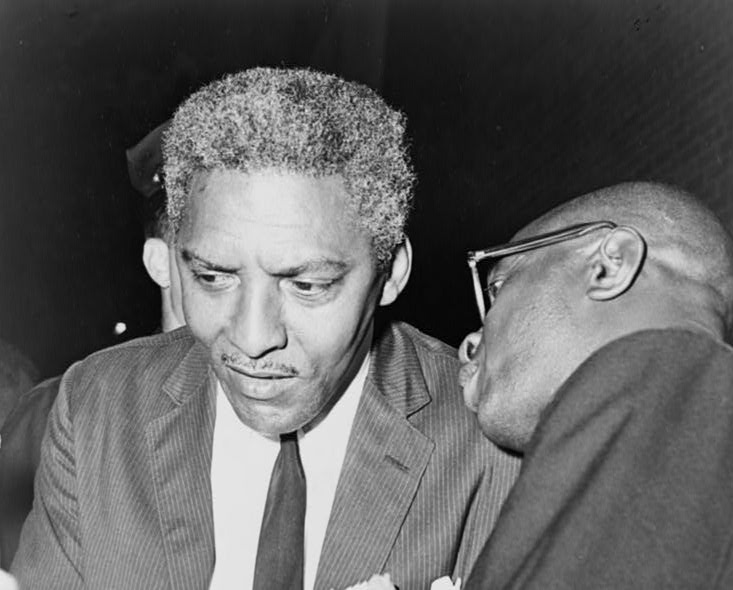
Civil rights leader Bayard Rustin in 1964. Stanley Wolfson / Library of Congress
In 1964, there were few things that Students for a Democratic Society and Barry Goldwater agreed on.
SDS was becoming a key voice of a new wave of American radicalism, and the organization’s veterans would go on to shape the US far left for decades. In much the same way, backers of Goldwater’s failed presidential campaign that year would eventually become key figures in the new Republican Party, turning it into a proselytizer for free-market fundamentalism whose vigor was matched only by the evangelical commitments of its new voting base.
Though the future trajectories of SDS and the Goldwater campaign were unknown at the time, in 1964 they were already implacable opponents. SDS, convinced of the threat Goldwater represented, reluctantly agreed to campaign for his opponent, Lyndon Baines Johnson, with the slogan “Half the way with LBJ.”