Chris Wickham Revolutionized Our View of the Middle Ages
The British medieval historian Chris Wickham, who died earlier this month, transformed our understanding of the Middle Ages. Rooted in the great tradition of British Marxist historiography, Wickham covered a staggering range of case studies in his work.
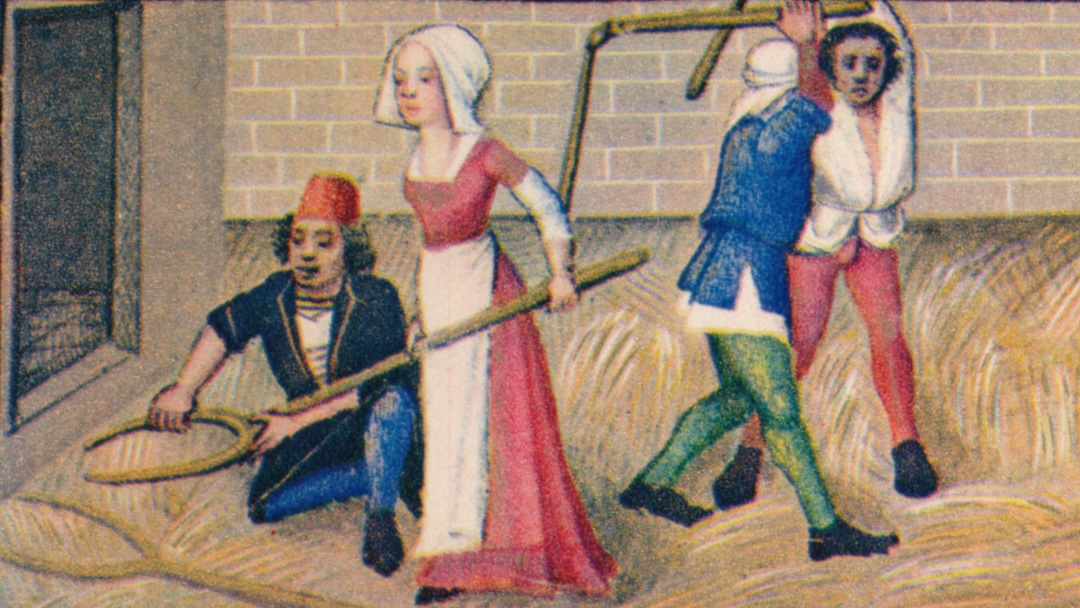
Chris Wickham rewrote the economic and social history of the Middle Ages, overturning past interpretative paradigms (including his own). He could move from microstudies of local societies to the macroeconomic factors shaping the premodern world economy. (The Print Collector / Heritage Images via Getty Images)
With the passing of Chris Wickham earlier this month, we have lost the greatest medieval historian since Marc Bloch, and one of the most original Marxist historians ever. In his career, which spanned half a century, Wickham wrote more than twenty books and two hundred articles. In these works, he showed how the social and economic structures of Europe and the Mediterranean transformed in the period from 500 to 1500.
Key factors in his analysis were the rise and fall of the state, the political and economic role of the landowning elites, and the protagonism of the peasants. His massive intellectual production revolutionized not only our idea of the Middle Ages but above all our understanding of how societies function and change across time.
Formative Years
Chris Wickham was born on May 18, 1950, into a middle-class family in the Welsh village of Rossett. He attended a private school in Somerset, England, before beginning his studies at the University of Oxford in 1968, from which he graduated in 1971. During these years, he frequently traveled to Italy, becoming familiar with its early medieval landscape.